















A Saudi media trailblazer who transformed hardship, unkind relatives, and discouragement into a global journey of achievement, education, and influence.

Dr. Sameera Aziz’s story is not merely one of professional success; it is a testament to resilience forged through adversity. Born in the Saudi city of Al-Khobar and now based in Jeddah, this Saudi media personality, journalist, filmmaker, author, poet, and entrepreneur has built a remarkable career that serves as an inspiring role model for many.

Yet behind the honours and achievements lies a childhood shaped by an environment where kindness was scarce and encouragement even rarer. Raised in circumstances where some relatives showed little empathy toward a fatherless child of a widow, she grew up feeling overlooked and often unwelcome. Their coldness and envy did not break her spirit; instead, they became the fuel that pushed her to rise above her surroundings and pursue a future defined by education, purpose, and dignity.

From an early age, she felt a deep sense of responsibility to support her mother like a son. In an environment filled with discouragement, she drew immense strength and courage from her own willpower.By the age of nine, she had already developed a deep fascination with the power of words and storytelling. Even though her environment was not positive and her presence was often overlooked, she had resolved early on that she would one day become a journalist.She was the only daughter between two sons, and to protect her heart from this painful remark, she would often cover her ears with her fingers whenever people, expressing sympathy for her mother, would say, “Thank God this widow has only the burden of one daughter.”

When she entered her youth, one close relative—driven by personal interest and a degrading mindset—even attempted to arrange her marriage to her mentally ill brother, who was kept chained because of his condition.That relative believed that in return for the financial assistance given to Sameera’s widowed mother in the form of zakat, she could effectively “purchase” Sameera for her mentally ill brother. Distressed by this pressure, Sameera’s mother accepted a marriage proposal that came from the United States and arranged her engagement there. However, the young Sameera experienced deep emotional hurt when her fiancé questioned her desire to pursue education and build a career in media, saying that the daughter of a widow should remain within her limits and should not dream big.

In this situation, teenage Sameera pleaded with her mother not to marry her off. She reassured her mother that she was not a burden, but a ‘useful’ and determined daughter who wished to pursue her education and build a meaningful future.However, her widowed mother was not reassured, as she remained worried about the relative’s intentions to marry Sameera to her mentally unstable brother. Eventually, at the age of sixteen, Sameera’s marriage was arranged with her Saudi cousin. His mother—Sameera’s Saudi aunt—had admired her since birth and had even expressed, on her deathbed, her heartfelt wish to welcome Sameera as her daughter-in-law.Sameera agreed to the marriage only on the clear condition that she would be allowed to continue her education and pursue her ambitions. This commitment marked the beginning of her journey toward academic and professional achievement despite the many challenges she had faced early in life.She honoured that commitment with extraordinary discipline, balancing family and children’s responsibilities while studying and working tirelessly to build a career. She did not adopt a life of luxury for even a single day and remained hardworking, self-restrained, and self-respecting.

After marriage, when she returned to her birth country, Saudi Arabia, she observed that Saudi stories were often misunderstood internationally. This deepened her sense of mission: journalism would not merely be a job, but a bridge between cultures and a way to represent her homeland, Saudi Arabia, with truth and pride. As the daughter of a widow, her desire to be ‘useful’ became a powerful source of energy and motivation.

The years that followed were not easy. In a conservative era, when media was considered a taboo profession for women in Saudi Arabia, she was repeatedly told that she could not succeed.Her early struggle with Arabic added to the challenges, yet she transformed that weakness into an advantage by using her fluency in Urdu and English to communicate Saudi narratives to a global audience. Balancing motherhood, marriage, education, and work, she endured sleepless nights and relentless pressure. During those days, the lack of support from some relatives and acquaintances—despite the promise that she would be allowed to continue her studies after marriage—only strengthened her resolve. Rather than allowing bitterness to define her, she chose perseverance and purpose and learned how important it is to make life easier for others.

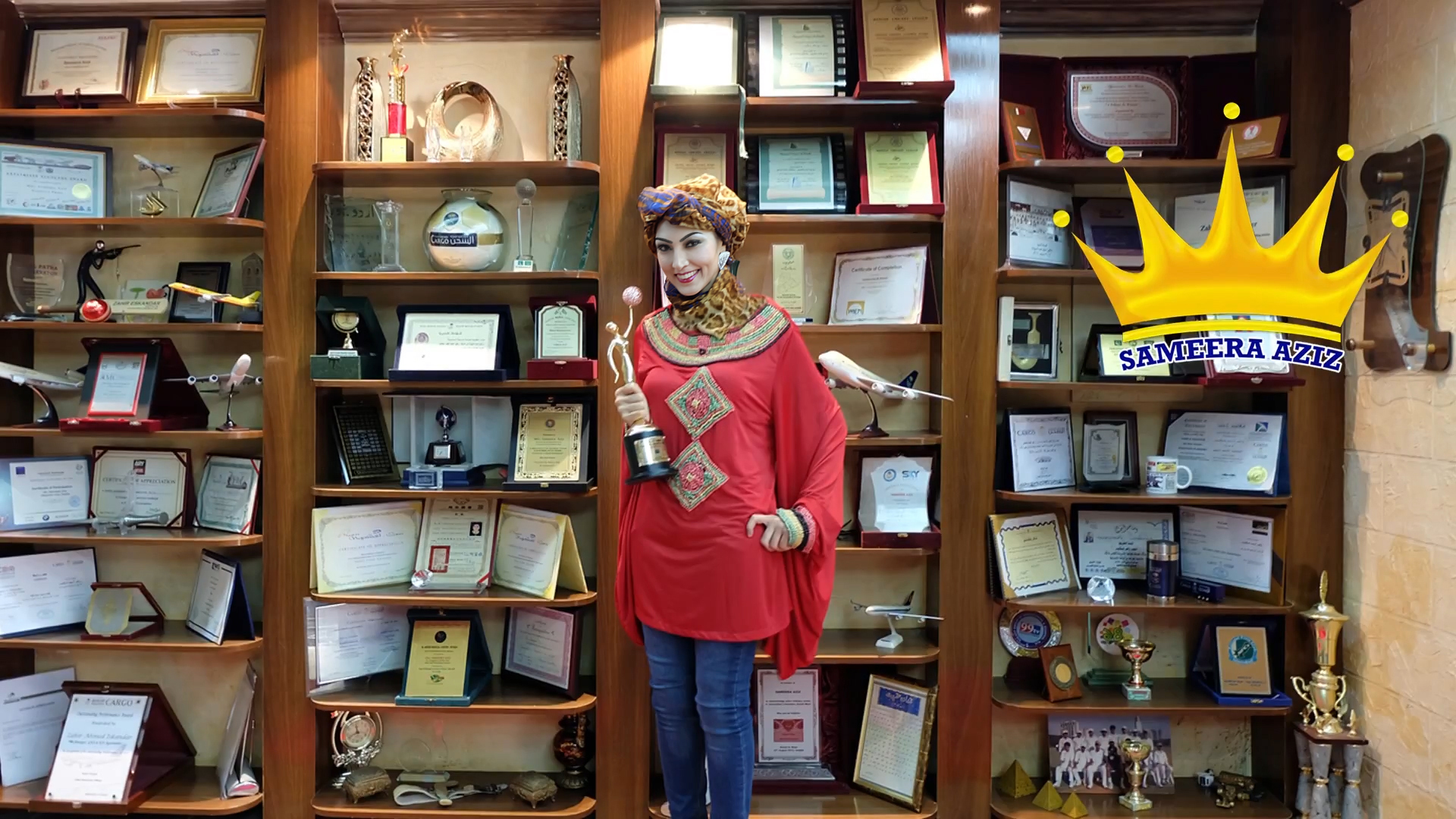
Her dedication eventually led to a PhD in Mass Media, through which her education, efforts, and experiences were recognised and honoured—a milestone achieved through years of sacrifice and resilience. Today, Dr. Sameera Aziz is widely recognised as a pioneering Saudi media figure. She serves as the Chairperson of the Sameera Aziz Group of Companies in Jeddah, overseeing ventures in advertising, film production, events, construction, shopping centres, hospitality, and international trade. Over a career spanning nearly three decades, she has worked as an investigative journalist, senior international editor, and radio anchor and is now actively engaged in digital journalism. After receiving advanced professional training under the patronage of the late Prince Ahmed bin Salman bin Abdulaziz Al Saud, she became one of the pioneering women in the Kingdom’s media sector and, with courage and steadfast determination, overcame significant barriers in a male-dominated field to establish a strong professional identity.

Alongside her work in journalism, she also gained international recognition as an author, poet, and speaker. She holds the distinction of being the first Saudi female filmmaker to qualify in Bollywood and the first Saudi novelist and poet in the Urdu language.Her work in media and cultural diplomacy has taken her to global conferences and international platforms, where she promotes Saudi Arabia’s positive image and fosters cross-cultural understanding. Among her many accomplishments is organising a Guinness World Record-setting human mosaic, demonstrating her leadership and creative vision. She has received numerous awards, including the Great Woman Award in the Middle East, and has been honoured with international titles and positions that recognise her contributions to media, literature, and social development.

Today, as her life story inspires a forthcoming cinematic adaptation, Dr. Sameera Aziz’s journey stands as proof that adversity can be transformed into strength. The unkindness she once faced did not define her future; it shaped her determination to succeed and to help others rise. From a childhood shadowed by discouragement to a life illuminated by achievement, she embodies the spirit of perseverance, education, and unwavering belief in one’s purpose. She says: “Never be the person who, when someone looks back on their life, is remembered as the villain in their story. Create ease for others. Be selfless, determined, and straightforward.”