

















By MahbubaSumaiyah Florida
Climate change is a global menace. Like few other countries across the globe, south Asian countries such as Bangladesh are most vulnerable to climate change. Factors contributing to vulnerability such as Low Adaptive Capacity, High Exposure, Existing Challenges make the countries and regions more vulnerable because many of these countries have limited resources and infrastructure to cope with and adapt to climate shocks, whereas high exposure countries are often located in geographical areas prone to extreme weather events like droughts, floods, and heat waves and countries with challenges such as poverty, instability, and food insecurity are exacerbated by climate change, creating a vicious cycle. This article will focus on the climate change and the vulnerability to women and children in the south Asian context with country like Bangladesh.
Bangladesh, a minor contributor to global greenhouse gas emissions, faces the consequences of climate change. This includes loss of life, destruction of resources, and the displacement of thousands of families who have lost their properties to floods. Women and children are the most impacted as their health, safety and security are at risk.Climate change and extreme weather conditions affect everyone. However, men, boys, women and girls all experience the impacts of climate change differently.
For mothers in rural Bangladesh, climate change determines whether their children have access to enough clean water for drinking and food to eat. As rising temperatures and floods damage crops, women are working harder each day to find food and safe water for their families as local resources become scarce. This additional duty not only makes their daily lives more exhausting but also limits the time they can devote to their children’s education and well-being.
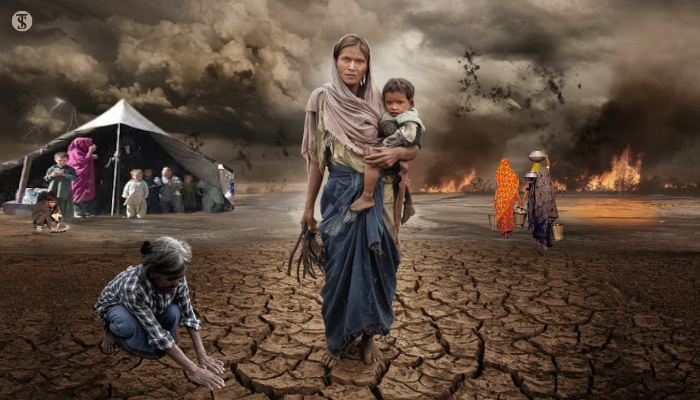
Women are often the primary caregivers in their families. They are responsible for providing food and water and taking care of the old and the very young. They are also more likely to live in poverty and have less access to resources than men. More women are negatively affected by climate change because of inadequate and unequal access to land, water, energy, finance, information and technology. Women face higher risks and even greater burdens because of the effects of climate change — for example, they have to travel further to obtain daily supplies, which exposes them to risks to their personal safety. Floods increase the salinity of drinking water, making it unsafe for many families across Bangladesh, especially in coastal regions. This is because over time, saltwater contaminates the ponds, making freshwater sources undrinkable. The increased salinity of water causes health problems such as cardiovascular diseases and reproductive health problems. Additionally, the rise in salinity also harms soil and crops, reducing harvests, damaging infrastructure that once provided for these communities, and cutting off an essential source of revenue for many households.
Women have less access to and control over environmental goods and services, have lesser participation in decision-making and are not involved in the distribution of environment management resources. Children are among the most vulnerable to the effects of climate change. When floods destroy crops and family incomes, many households struggle to provide balanced and nutritious meals, which increase the risk of malnutrition amongst children. Contaminated water also makes them susceptible to waterborne diseases such as cholera and skin diseases. Treating these diseases often leads to higher healthcare costs, leading to greater financial hardship for families, and without proper care, the conditions from the diseases can worsen.
Furthermore, flooding forces families to relocate, making it difficult for children to adjust to new environments, such as their new school. It also causes school closures, which interrupt schooling as a whole. These disruptions make it challenging for them to continue their education, resulting in them missing months of schooling each year. Some children, particularly girls, start working to support their families instead of continuing their education, as they are more likely to be kept home due to safety concerns or other household responsibilities. This leads to higher dropout rates and constant uncertainty, which takes a toll on the children’s mental health and harms their well-being.
Women carry the greatest burden of keeping their families safe and fed under harsh conditions. Displacement during floods increases their vulnerability, as shelters lack privacy and security. Moreover, limited access to clean water and sanitary products also leads to poor hygiene, increasing the risk of infections and reproductive health complications. Flooding reduces women’s income from agriculture, pushing many into poverty. The added physical burden from increased hours of labour leads to added fatigue. It then further leads to emotional stress as they try to provide for their families with the limited resources they have left after each disaster. The unpredictable weather leaves many living with uncertainty and fear about the future.
Men may take more risks by going outdoors immediately after a climate change–related event, however, women tend to do more work than men in rebuilding the home, and they spend more time on rebuilding and repairing than they did before the disaster. They also have to find alternative means of getting water, fuel and food. This means they have to use improvised methods for washing, cooking and sanitation and, with no or limited access to electricity and motorized transport, their gendered responsibilities take more time than ever to fulfill. Their workload becomes more difficult, and their increased time burden leaves them with even less time to access training and education, develop skills, or earn income after disasters.
Disasters relating to climate change disrupt food and energy supplies, transportation services and social services. Scarcity drives up the costs of goods and services, and this disproportionately affects women.Women tend to take on the role of keeping the family and community together through voluntary work. The unpaid emotional support they provide contributes to rebuilding communities.
Globally, women and children are more likely than men to die during extreme weather events linked to climate change. For example, in a 2003 heat wave in Europe, more women than men died. In 2004, after the tsunami in the Indian Ocean, between 70 per cent and 80 per cent of all deaths were women. In 2005, after Hurricane Katrina struck New Orleans, USA, African American women, who were among the poorest in the population, faced the greatest challenges to survival.Similarly south Asian countries have also devastating experiences of climatic changes. In Bangladesh, the areas most heavily affected by the impacts of climate change include the coastal areas, where settlements get flooded with salt water. Other areas experience drought, flash flooding and river erosion. In 1991, when a cyclone hit Bangladesh, 90 per cent of the victims were women.
Beyond the physical damage inflicted by the impacts of climate change — for example, the destruction of homes, livestock and crops — there are usually unseen ripple effects on people’s livelihoods and their social lives.In Bangladesh, Pakistan and Sri Lanka, many people depend on agriculture for their livelihoods, and many of the smaller farmers are women. A woman in that situation may lose her livelihood and fall into poverty. When the surrounding environment and homes are damaged and livelihoods are lost, many people migrate or move to less affected areas.The floods in Pakistan in 2023 were described as the worst in the country’s history. They swept away everything in some districts, and people were forced to move empty-handed to other districts. For women with no resources, building back will be harder than it will be for men, and they may have to stay in temporary shelters for longer.
Despite challenges, many women in Bangladesh continue to show strength as they find ways to support their families. Firstly, women are finding new income sources to regain financial stability. They do this by producing handicrafts, running small shops, or raising poultry and fish. This leads to greater financial independence, which boosts their confidence and power. Additionally, in areas with higher salinity, women collect rainwater and store it for safe drinking water for later use when water becomes scarce.
In recent years, heavily climate vulnerable south Asian country like Bangladesh has made progress in adapting to these challenges. Government leaves no stone unturned for the adaptation and resilience and already has developed warning systems such as SMS alerts and radio updates to notify and help families evacuate before any disaster. They have also improved flood shelters, which have designated spaces for women and children to ensure safety and privacy. Government departments and NGOs that are led by women also play a vital role in helping families deal with the effects of floods and other natural disasters. They teach people how to prepare for floods, store food and water safely, and protect their homes. Additionally, they train women in order to have other income sources other than just agriculture. They also help set up clean water systems, distribute sanitary products, and provide healthcare in areas affected by disasters. Side-by-side the Government’s initiatives, some NGOs build temporary schools or provide materials to children so that they can continue studying even when schools are closed. These efforts show Bangladesh’s ability to turn vulnerability into strength.
[Writer: A Grammarian – KGS Alumni]
—