
















By Brig Syed Karrar Hussain Abidi, Retired
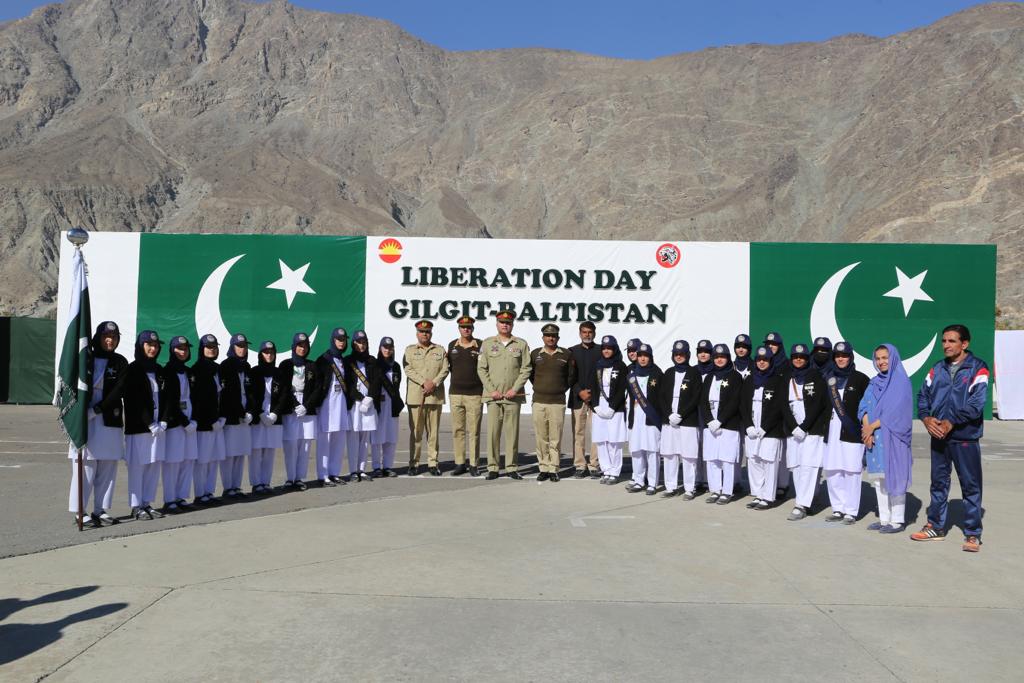
It was a crisp November morning, the year 1947, still trembling in the winds of partition. The mighty Karakoram stood tall and silent, their snow-covered peaks reflecting both beauty and the burden of history. Beneath those majestic heights, the people of Gilgit-Baltistan—simple, proud, and fiercely brave—rose to alter the destiny of their land forever.
Echoes of Oppression
For centuries, the valleys of Gilgit, Hunza, Nagar, and Baltistan remained isolated jewels of nature—rich in culture, poor in resources, and governed by rulers far removed from their hearts. The Dogra Raj of Jammu and Kashmir, under Maharaja Hari Singh, had extended its oppressive shadow over these mountains. Heavy taxation, forced labour, religious discrimination, and utter neglect defined the life of the common man.
Yet the people endured—with patience born of faith and the ruggedness of their environment. Their loyalty was never to the Dogra throne; it was to Islam, to freedom, and to the dream that one day they would breathe as citizens of a homeland that respected their dignity.
The events of 1947 ignited that dormant fire. As the British departed and India and Pakistan emerged, the Maharaja’s indecision to join either dominion caused widespread unrest. The people of Gilgit-Baltistan, under the command of their local officers and inspired by the idea of Pakistan, decided that they would no longer remain prisoners in their own paradise.
The Spark of Revolution
In Gilgit, a young and resolute officer, Major William Brown, who commanded the Gilgit Scouts, became an unlikely participant in history. Although British by birth, he stood by the aspirations of the local populace. On 1st November 1947, the Gilgit Scouts and local revolutionaries overthrew the Dogra Governor, Brigadier Ghansara Singh, without large-scale bloodshed. The green flag of Pakistan was hoisted on the roof of the Gilgit Residency—days before Pakistan could even comprehend the magnitude of what had occurred.
It was not an imported revolution; it was a native uprising, led and fought by sons of the soil—by people like Subedar Major Babar Khan, Captain Mirza Hassan Khan, Raja Shah Rais Khan, and countless others whose names history seldom records but whose courage echoes in the mountain winds.
Baltistan Follows the Call
While Gilgit was freed, Baltistan, Skardu, and adjoining regions remained under Dogra control. Here began one of the most heroic yet lesser-known chapters of our national struggle. The local people, joined later by volunteers from the Pakistan Army and tribes from the North-West Frontier, launched a daring campaign.
They faced harsh weather, thin air, and impossible terrain. Yet, guided by faith and love for the new homeland, they fought with unmatched bravery. The Siege of Skardu Fort, lasting over six months, stands as a testament to their perseverance. Eventually, on 14th August 1948, Skardu was liberated, and the green crescent again fluttered triumphantly in the cold Baltistani breeze.
It was not the victory of weapons but of will—the will of mountain men who refused to bow before tyranny.
A Soldier’s Reflection
In 1993 , I found myself standing on the same soil—this time not as a historian but as a soldier. I served in Baltistan and along the unforgiving heights of Siachen Galciars, where life itself feels like a daily battle against nature.
I remember the biting wind of Skardu, International Hicking Expedition Camp on my way to Base of K2,
Giyang and Giyari could pierce even the thickest winters uniform, and yet the warmth of the people’s hospitality melted every hardship. The night skies there were unlike any other—galaxies scattered like pearls across an inky canvas. My family, specifically my wife, often recalls how every evening in Skardu felt like a chapter from some celestial story. Those days remain etched in our memories—the laughter of my children,Waqar, Iftikhar and Ansaar, playing by the Indus River near Gamba, the fragrance of apricot blossoms, and the quiet resilience of the people who once freed themselves with faith alone.
Truly, if there exists a heaven on earth, it must rest somewhere between the valleys of Khaplu and Hunza, where mountains touch the sky and the human spirit knows no fear.
Strategic Importance of Gilgit-Baltistan
Beyond its beauty, Gilgit-Baltistan is Pakistan’s northern shield, the guardian of our frontiers. It shares borders with China, Afghanistan, and India, making it a linchpin of Pakistan’s defence architecture. The Siachen Glacier, though barren and lifeless, is a symbol of endurance and strategic vigilance—where every soldier stationed is a living sentinel of the nation’s sovereignty
Economically, the region holds untapped potential. Its hydropower resources, estimated at over 40,000 megawatts, could energize the entire nation. The Karakoram Highway, cutting through the world’s highest mountains, connects Pakistan with China and serves as the backbone of CPEC (China-Pakistan Economic Corridor)—a modern revival of the ancient Silk Route.
The glaciers of Gilgit-Baltistan are the fountains that feed the Indus River, sustaining our plains and farmlands. Its tourism industry, if developed wisely, can rival the Alpine regions of Europe. From the majestic K-2 to the tranquil Satpara Lake, from Deosai Plains to Naltar Valley, every corner of this land speaks of beauty and opportunity.
Challenges and Responsibilities
Yet, amidst its grandeur, the people of Gilgit-Baltistan continue to struggle with inadequate infrastructure, limited health facilities, and restricted educational opportunities. The harsh winters isolate many villages for months. Youth, despite talent and patriotism, face limited employment options.
During my service there, I witnessed how courage and dignity defined even the simplest villagers. They never demanded luxury—only recognition, justice, and progress. Their loyalty to Pakistan is unwavering, even though political ambiguity long deprived them of constitutional rights. Recent efforts to grant them representation and developmental projects have provided hope, but much remains to be done.
Recommendations for a Brighter Future
To honour the spirit of those who liberated Gilgit-Baltistan in 1947, our government must now liberate the region from poverty, isolation, and neglect.
1. Infrastructure Development:
Expand and maintain all-weather roads, tunnels, and communication networks, especially the Gilgit-Skardu and Shigar routes. Modern connectivity will not only enhance tourism but also ensure timely logistics for defence and trade.
2. Hydropower and Renewable Energy:
Initiate small and medium hydropower projects using local rivers and streams to meet regional energy needs and supply surplus to the national grid.
3. Tourism and Eco-Protection:
Develop sustainable tourism with proper facilities, guided by strict environmental regulations to preserve the fragile ecosystem. Train local youth as certified mountain guides and hospitality experts.
4. Education and Research:
Establish a Baltistan University of Mountain Sciences and Ecology, focusing on glaciology, geology, and climate resilience—fields where the world seeks expertise.
5. Healthcare Expansion:
Build advanced hospitals and mobile medical units capable of operating in high-altitude zones. Medical evacuation facilities must be integrated with Army aviation assets.
6. Economic Empowerment:
Encourage local handicrafts, apricot-based products, gemstones, and dry fruits for export under the “Made in Gilgit-Baltistan” brand.
7. Full Constitutional Rights:
The people who chose Pakistan voluntarily in 1947 deserve full political participation. Granting representation in the National Assembly and Senate will strengthen national unity and fulfil the promise of justice.
8. Civil-Military Collaboration:
Continue leveraging the Pakistan Army’s expertise in building roads, bridges, and schools in remote areas—just as they protect the icy frontiers with unflinching dedication.
The Spirit Lives On
As I look back upon the snowy ridges of Siachen and the tranquil valleys of Baltistan, I see not just geography but sacrifice—of those who fought without armour, of families who endured without complaint, and of soldiers who still guard those heights under the fluttering green flag.
The liberation of Gilgit-Baltistan was not merely a political event—it was a rebirth of dignity. It was the triumph of courage over cruelty, faith over fear, and unity over tyranny.
Today, as Pakistan moves toward progress, we must remember that our northern borders were not granted—they were earned by the devotion of the mountain dwellers who knew that liberty was sweeter than life itself.
Conclusion
In every gust of Baltistan’s wind, one can still hear the whisper of freedom—the echo of that November morning when destiny changed course. The world may call it remote or inhospitable, but for those who understand its history, Gilgit-Baltistan is the crown of Pakistan, its sentinel, and its silent poet.
May the green flag continue to flutter over its peaks, reminding us that the struggle of 1947 was not only for land—but for the soul of a nation.