














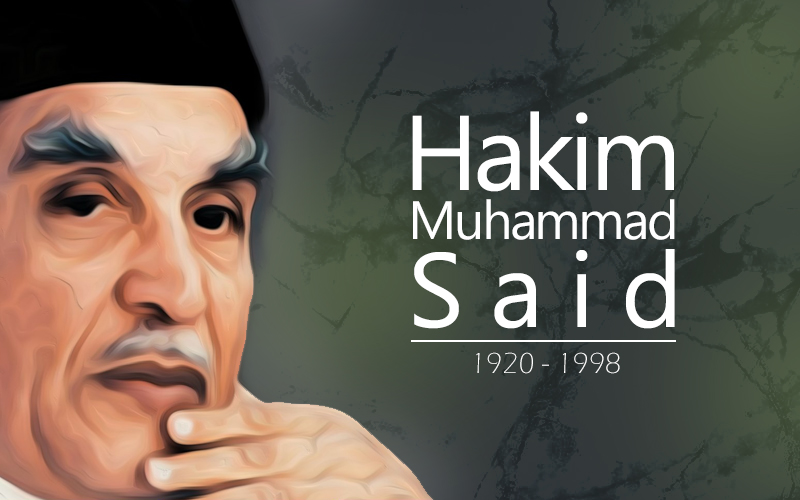

By: Mian Muhammad Shaheryar
In the history of Pakistan, there are individuals whose lives extend far beyond their personal achievements. Through their ideas, character and contributions, they become a source of inspiration for generations to come. Hakim Muhammad Saeed Shaheed was one such remarkable personality who devoted his entire life to medicine, education, research, moral development and service to humanity.
His death anniversary is not merely an occasion to remember a great man. It is also an opportunity to ask ourselves whether we have done enough to carry forward the mission he dedicated his life to serving.
Promoting Eastern Medicine and Serving Humanity
Hakim Muhammad Saeed was assassinated in Karachi on October 17, 1998. His death was an irreparable loss to Pakistan’s intellectual, medical and social communities. He was a distinguished practitioner of Eastern medicine, researcher, author and institution-builder. He viewed traditional medicine not simply as an inherited profession but as a field that required research, quality standards, discipline and a strong commitment to human welfare.
Through Hamdard Pakistan, he helped establish an institutional framework for healthcare services and the production of medicines, with the broader objective of serving the public and preserving the tradition of Eastern medicine.
At the heart of his philosophy was a simple but powerful belief: healthcare is not merely a commercial activity; it is a moral responsibility towards humanity.
Hamdard and Madinat al-Hikmah: A Mission Greater Than One Individual
Any discussion of Hakim Muhammad Saeed’s contributions would remain incomplete without recognising the role of Hamdard Pakistan. He played an important part in developing the organisation into a broader mission encompassing education, research, healthcare and social welfare.
Madinat al-Hikmah and its associated educational and research initiatives reflected his conviction that national progress depends not only on good health but also on knowledge, intellectual development and scientific inquiry.
For him, education was not simply about obtaining a degree. Its real purpose was to produce responsible, principled and productive citizens.
At a time when questions are frequently raised about research, character-building and practical training in educational institutions, his vision of education deserves renewed attention. His life reminds us that the success of an educational institution should not be measured merely by its buildings or the degrees it awards, but by the character, knowledge and capabilities of the people it produces.
Nurturing the Minds of Children and Young People
One of the most admirable aspects of Hakim Muhammad Saeed’s personality was his deep commitment to children and young people. He worked extensively to promote children’s literature, encourage reading and strengthen moral education.
Through Hamdard Naunehal and other educational and literary initiatives, he sought to cultivate a love of reading, learning, questioning and good character among the younger generation.
He understood that the future of a nation rests upon the intellectual and moral foundations laid during childhood. When children become disconnected from books, receive inadequate moral guidance and focus exclusively on outward measures of success, sustainable social progress becomes increasingly difficult.
His message remains relevant to Pakistan’s families and educational institutions: children must be prepared not only to become successful professionals but also to grow into good human beings, responsible citizens and lifelong learners.
Public Service as Governor of Sindh
Hakim Muhammad Saeed served as Governor of Sindh from 1993 to 1994. Despite holding a senior public office, his enduring identity remained that of a physician, educator and social reformer.
His life offers an important lesson: public office acquires real meaning when it is used for the collective good rather than personal advantage.
He was widely associated with simplicity, hard work, discipline and punctuality. In his view, a person’s greatness was determined not by the position they held, but by the positive difference they made in the lives of others.
His Martyrdom and the Question of Our Collective Values
His assassination on October 17, 1998, was not merely the loss of an individual. Pakistan lost a man who had dedicated his abilities and energies to improving society.
His martyrdom reminds us of the devastating consequences that violence and intolerance can have for a nation’s intellectual, social and economic development.
However, the true way to honour such a personality is not to limit our tribute to ceremonies, statements of appreciation and newspaper articles. The more important question is whether we are advancing the educational and social objectives he stood for.
Are we encouraging our children to read? Are we giving healthcare, education and research the priority they deserve? Are we building institutions that serve the public interest?
These questions deserve serious consideration from the government, educational institutions, civil society, the private sector and every responsible citizen.
Keeping Hakim Muhammad Saeed’s Mission Alive
Pakistan needs institutions that promote knowledge and research, improve access to quality healthcare, reconnect children with books and inspire young people to serve society.
Hakim Muhammad Saeed’s life offers a meaningful example of how these objectives can be pursued with dedication and purpose.
On the occasion of his death anniversary, his contributions should not be treated merely as a glorious chapter of the past. His ideas must be translated into practical initiatives.
Reading programmes in schools, support for medical research, the promotion of children’s literature and community welfare projects are among the ways his mission can be carried forward to future generations.
Conclusion
Hakim Muhammad Saeed Shaheed demonstrated through his life that a person can rise above personal ambitions and leave behind a legacy that continues to benefit others.
When knowledge is dedicated to the welfare of humanity, its impact does not end with the death of the person who possesses it. Their ideas, institutions and services continue to guide society long afterwards.
As we observe his death anniversary on October 17, we should not only pay tribute to his personality but also reflect upon our own responsibilities.
True loyalty to his mission means promoting knowledge, improving healthcare, investing in the upbringing of children and making tolerance, integrity and service to humanity central to our national priorities.
Hakim Muhammad Saeed Shaheed is no longer physically among us, but the message of his life remains before us. The choice is ours: will we simply remember that message, or will we make it a living part of our national life?
May Allah Almighty forgive Hakim Muhammad Saeed Shaheed, accept his services to humanity and grant Pakistan the strength and wisdom to advance along the path of knowledge, peace, health and humanitarian service. Ameen.