



















Dr. Syed Mehboob
Economic and Political Analyst
http//: www.thenewslark.com
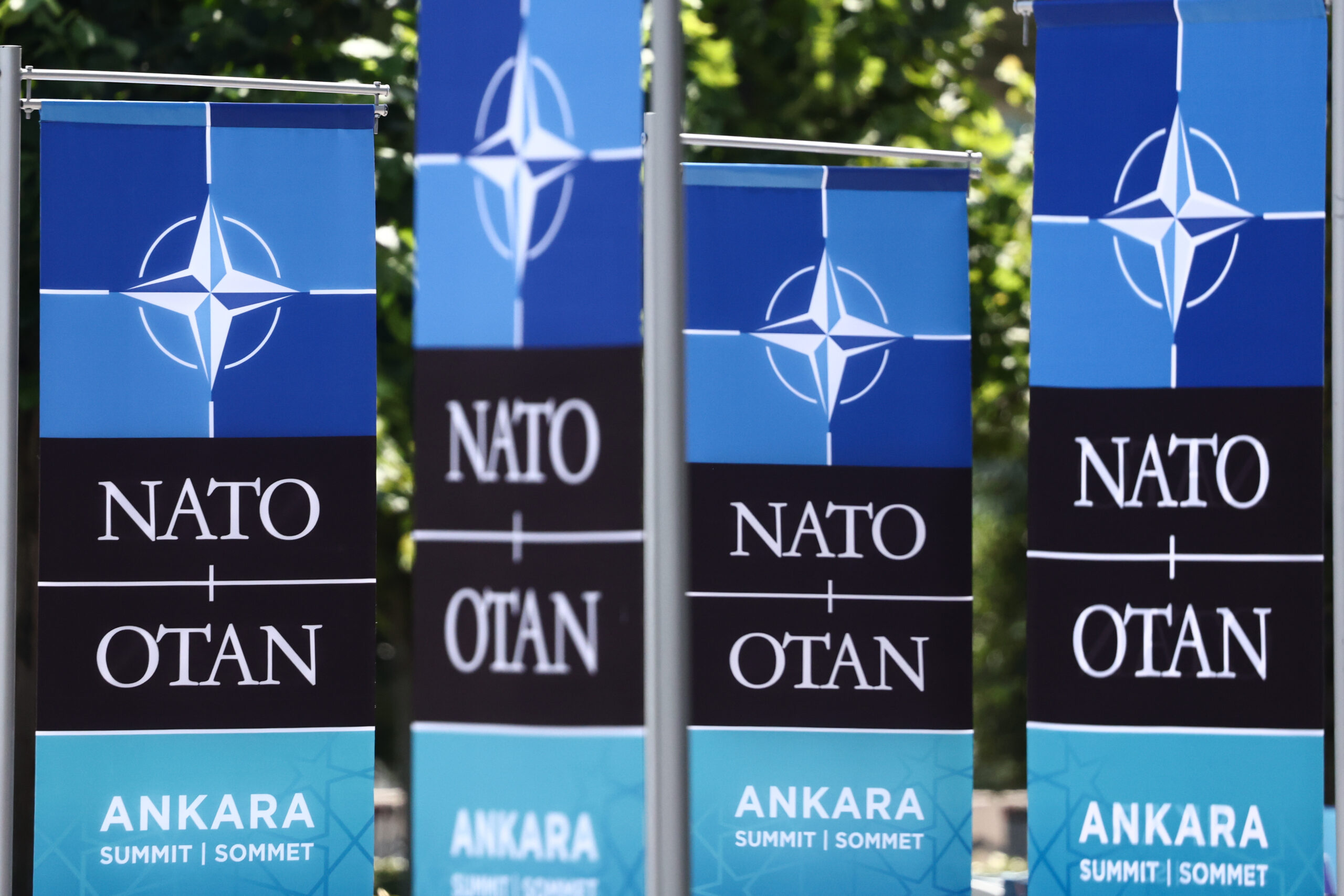
Türkiye is a very important country not only for the Muslim Ummah but also for the Western world. It cannot be ignored in global power politics. July 7 and 8 2026, were important dates when Türkiye hosted the NATO Summit 2026 at the Presidential Complex in Ankara. It was NATO’s 36th Summit and the second Summit hosted by Türkiye. Leaders reaffirmed their commitment to increasing collective defense investments and reviewed progress on reaching historic defense-spending targets.
The Summit featured high level discussion on European rearmament, missile defenses, and the security environment surrounding the Black Sea and the Middle East. President Recep Tayyip Erdogan provided world leaders with highly unusual gifts, engraved Turkish revolvers and live ammunition.
Prior to the summit, extensive infrastructure and urban renewal projects were carried out along the primary transit routes and surrounding areas of the venue. Coordinated by the Ministry of Transport and Infrastructure and the Ankara Metropolitan Municipality, major road expansion, resurfacing, and intersection modernization projects were completed on the highway connecting Esenboga International Airport to the summit center.
Türkiye is militarily valuable, geographically essential, and regionally influential, and NATO desperately needs Türkiye’s support. The end of the Cold War reopened the importance of Türkiye’s value. Middle East crisis highlighted Türkiye’s importance. If Russia’s pressure extends beyond Ukraine and begins to threaten continental Europe more directly, the Black Sea remains militarized, instability continues across the Middle East, China’s global role grows in closer coordination with Russia, and the United States becomes less predictable, European allies will have stronger incentives to work with Turkey despite political disagreements. Strategic necessity will likely push them toward Ankara. If the threat environment softens, older objections will regain force. Concerns about Turkey’s domestic politics, relations with Russia, tensions with Greece and Cyprus, and willingness to use NATO procedures for national bargaining will become more prominent. Turkey’s influence inside NATO expands when necessity outweighs discomfort, and it contracts when allies believe the costs of exclusion are manageable.
NATO summit in Ankara placed Türkiye’s importance at the center of alliance politics. Türkiye has survived decades of disputes with NATO because the alliance has reportedly found Türkiye too useful to lose, while Türkiye has repeatedly found NATO too valuable to leave. That pattern is likely to continue. In the future, Türkiye would be more important for NATO.
The NATO Summit Defense Industry Forum ( NDIF26), NATO’s premier high-level event on transatlantic defense production, investment and innovation, took place on 7 July 2026 in Ankara, Türkiye. An integral part of the 2026 NATO Summit, the Forum brought together senior NATO, Allied and partner officials, industry leaders, and the communities responsible for driving forward industry and innovation to discuss its most pressing issues.This year, the Forum focused on Allied progress towards reaching NATO’s historic 5% defense investment plan, and on how this money is being put into action to generate increased defense production, cooperation and joint procurement, all in the service of generating stronger industrial deterrence for the Alliance.
The NATO Summit Defense Industry Forum (NSDIF26), NATO’s premier high-level event on transatlantic defense production, investment and innovation, took place on 7 July 2026 in Ankara, Türkiye.
An integral part of the 2026 NATO Summit, the Forum brought together senior NATO, Allied and partner officials, industry leaders, and the communities responsible for driving forward industry and innovation to discuss its most pressing issues.
Previous editions at The Hague and Washington made clear that there is no strong defense without a strong defense industry. This year, the Forum will focus on Allied progress towards reaching NATO’s historic 5% defense investment plan, and on how this money is being put into action to generate increased defense production, cooperation and joint-procurement, all in the service of generating stronger industrial deterrence for the Alliance.
NSDIF 2026 consisted of:
A one-day conference offered six closed-door ‘spotlight’ sessions in the morning and livestreamed plenary sessions in the afternoon. The morning sessions were run concurrently and were designed to maximize interaction within a small-group format. The afternoon segment included keynote addresses by NATO, Allied and industry leadership and plenary sessions which were broadcast to the public and were opened to the media; and, for the first time, high-level announcements of national, multinational and industry-led agreements, deliverables and initiatives. These announcements were made throughout the day, on the margins of the conference programme, at the NSDIF venue. They covered a wide range of NATO priority capability areas, including: space and surveillance; integrated air and missile defense and strike capabilities. They addressed the need to boost transatlantic co-production, increase rapid adoption of innovation, improve NATO-industry practical cooperation and deliver tangible defense investment guarantees.
NATO is an international military alliance formed by North American and European nations. It operates on collective security, meaning an attack on one member is treated as an attack on all. It was founded on April 4, 1949, in Washington, D.C, by 12 founding countries. It has thirty-two member states across Europe and North America. Its head quarter is Brussels in, Belgium.
Türkiye is making a strategic contribution to NATO’s future security architecture; it has significant technology development and production capacity, it has engineering expertise and a viable defense industry system. TUSAS supports this role through domestically developed platforms, engineering infrastructure and production capacity. Türkiye now supplies systems not only for its own defense needs but also for friendly and allied countries. Spain has contracted for thirty aircraft under an integrated combat training programme led by Airbus in cooperation with Turkish Aerospace.
Turkish Aerospace Industries (TAI) General Manager Mehmet Demiroglu said Türkiye is making a strategic contribution to NATO’s future security architecture, in remarks at a Chatham House panel in London, while separately detailing new specifications for the company’s AYAZ kamikaze drone and providing updates on the KAAN fighter jet program at the Farnborough Airshow.Speaking at an event titled “Perspectives from Ankara: The Security and Defense Implications of the NATO Summit,” hosted by Chatham House,
Demiroglu said production capacity, technological development and joint industrial projects are becoming key elements of NATO’s collective deterrence.
NATO members contribute to collective defense in two ways: by funding their own defense, and by helping to fund a shared budget for running the organization as a whole and maintaining joint facilities. Each member has committed to a target of spending at least 5% of their Gross Domestic Product (GDP) on their own defense and security by 2035, while in 2026 the shared budget was around €5 billion split between all 32 members. As of 2026, the US spends the most overall on its defense, Norway spends the most per capita, while Poland and the Baltic States spend the most as a share of GDP. The combined military spending of NATO members makes up over half of the world total. The combined militaries of all NATO members include about 3.5 million soldiers and personnel. Since US president Donald Trump’s reelection in 2024, NATO faced an unprecedented rift between the US and the majority of other NATO members, as the administration repeatedly threatened the sovereignty of two founding members, Canada and Denmark, in its reiterating proposals of Canadian absorption to the US and in the Greenland crisis, respectively, and in wider deterioration of US–European Union and Canada–US relations.( Continued )