














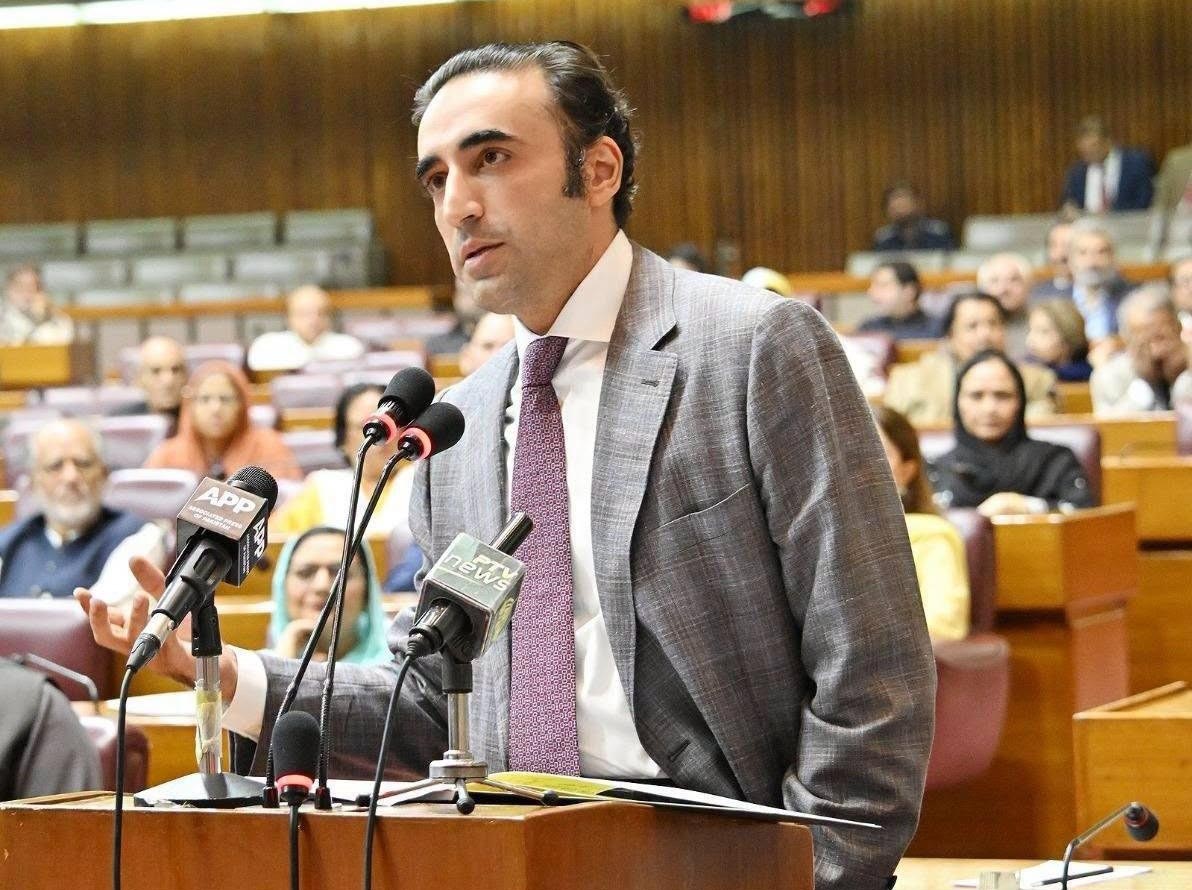
ISLAMABAD: Chairman of Pakistan Peoples Party (PPP) Bilawal Bhutto Zardari Thursday said that the Memorandum of Understanding signed between the United States of America (USA) and Iran is clear evidence that dialogue is better than war while diplomacy is more powerful than conflict.
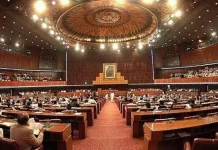
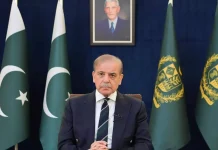
Participating in the budget debate, he said, he congratulated Prime Minister Muhammad Shehbaz Sharif and President Asif Ali Zardari, who have always worked for a peace and democracy, as well as Chief of Defence Forces (CDF) Field Marshal Asim Munir whose leadership, professional excellence and services for the defence of the country made Pakistan proud.
He said having faced huge losses and rendering immense sacrifices, Pakistan understands the cost of war very well and that the nation has faced severe economic consequences of instability. This is why Pakistan consistently advocates peace not only as a moral necessity but also an economic need.
“When war stops, trade increases. When there is regional stability, investment grows. When there is peace, young people get jobs and the country develops,” he added.
“On the western border, security challenges from Afghanistan remain before us, while on the eastern border, Operation Sindoor-2 is being threatened by India. The Indus Waters Treaty is also being attempted to be made a unilateral dispute. Foreign elements are also supporting terrorism in the country,” he added.
He said Pakistan has responded to these challenges through political cooperation and democratic consultation. The government and the military leadership have decided that extraordinary measures will be taken to ensure national security and cooperation.
Before this budget session, he said, rumors were circulated that the 18th Amendment would be abolished, provincial financial resources would be taken back, and a new arrangement outside the constitutional framework would be introduced. He said there were also rumours that the Benazir Income Support Programme would be abolished.
However, he said, “I am grateful to Prime Minister Shehbaz Sharif, Finance Minister Ishaq Dar, the entire finance team, and the Pakistan Peoples Party, who engaged with the government and reached a political consensus for a constitutional and democratic solution that meets national security needs while addressing provincial concerns. We have agreed that contributions to national defence will be made, while provincial financial shares under the NFC framework will remain protected. The NFC award and provincial resources will not be harmed,” he added.
“In today’s world, national strength is not based only on weapons. Real strength lies in unity, the Constitution, and political stability. Pakistan has once again proven this. If we continue working together in this manner, we can resolve all national challenges,” he added.
The Chairman said international institutions, including the IMF and World Bank, recognise BISP as a successful and effective social protection programme. Rather than reducing it, there is a need to expand it further to combat poverty in Pakistan.
Bilawal Bhutto stressed that Pakistan’s economy can achieve sustainable growth only when development policies prioritize the welfare of underprivileged and marginalized segments of society rather than benefiting only the affluent class.
He said economic progress should be measured by improvements in the lives of ordinary citizens, workers, farmers, and youth.
“Pakistan’s economy will only grow when the benefits of development reach the poor, labourers, farmers, and unemployed youth,” he said.
Referring to the agricultural sector, Bilawal said growth should not be assessed solely by the prosperity of large landowners. Instead, real progress should be reflected in improved conditions for small farmers and rural communities. Similarly, he said industrial growth should translate into better wages and working conditions for labourers and workers.
The PPP chairman also discussed the China-Pakistan Economic Corridor, describing it as a transformative project capable of opening new avenues of economic growth for Pakistan, particularly through the development of Gwadar Port.
Turning to Gilgit-Baltistan, Bilawal thanked the people of the region for their support for the PPP in recent elections, saying voters had once again demonstrated their longstanding affiliation with the party.
Bilawal said successive PPP governments had taken important steps to empower Gilgit-Baltistan, including granting political rights, allowing political parties to operate freely, and later providing the region with a distinct administrative identity, a governor, a chief minister, and an elected assembly.
Turning to the situation in Azad Jammu and Kashmir, he said the state had a responsibility to act against individuals who took the law into their own hands or attacked state institutions.
He said that prolonged protests and road blockades were harming ordinary citizens, disrupting supplies of fuel and food, and damaging Pakistan’s international image.
He said the PPP government in Azad Jammu and Kashmir had implemented most commitments under an earlier agreement and maintained that outstanding issues could still be resolved through negotiations and parliamentary processes rather than street agitation.
Bilawal appealed to protesters to end their demonstrations peacefully, distance themselves from individuals involved in violence, and allow political stakeholders to pursue a negotiated settlement.
At the same time, he reiterated the PPP’s longstanding position that the future of Kashmir should ultimately be decided by the Kashmiri people through a plebiscite in accordance with their democratic rights.
He warned that political disagreements over constitutional issues should not be allowed to damage Pakistan’s international image or the Kashmir cause. Calling on protesters to pursue democratic and constitutional avenues, he said political objectives could only be achieved through peaceful political struggle.
Referring to recent remarks by Kashmiri leaders from Indian Illegally Occupied Jammu and Kashmir, Bilawal said there was growing recognition that Azad Jammu and Kashmir enjoyed freedoms and democratic space that were absent in India.
He also referred to the arrest of Indian spy Kulbhushan Jadhav in Balochistan as evidence of foreign interference and alleged that hostile forces were attempting to exploit internal divisions within Pakistan.