














ISLAMABAD: President Asif Ali Zardari’s official visit to China from April 25 to May 1 marked a major step forward in Pakistan-China relations, with the two countries signing five Memorandums of Understanding (MoUs) and one agreement spanning defence, agriculture, healthcare, industrial cooperation and technology sectors.
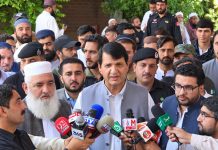
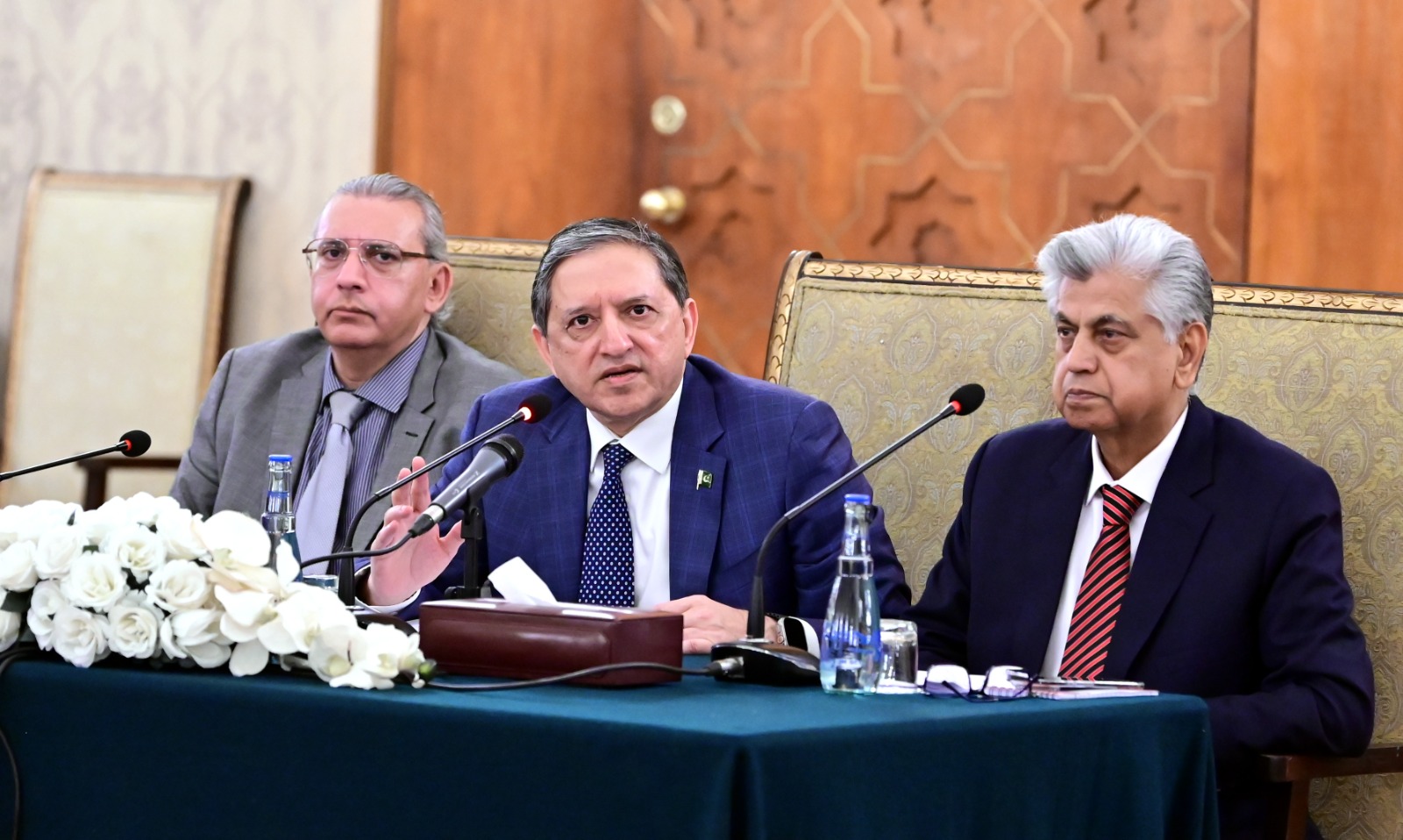
Addressing a press briefing, Presidential spokesperson Murtaza Solangi, flanked by Senator Saleem Mandviwala and Press Secretary of Presidency, Daniyal Gillani, said the visit was aimed at strengthening Pakistan’s strategic and economic partnership with China and sharing details of the President’s engagements with the Chinese leadership and provincial governments.
Solangi said President Zardari visited Changsha in Hunan Province and Sanya in Hainan Province, where he held meetings with provincial authorities, Chinese companies and investors to expand cooperation under CPEC 2.0 and related initiatives.
Describing the commissioning ceremony of the Pakistan Navy’s first Hangor-class submarine in Sanya as the jewel in the crown of the visit, Solangi said its strategic significance was comparable to the Pakistan-China JF-17 Thunder fighter aircraft project.
Solangi also highlighted the President’s visit to Shaoshan, the hometown of Chairman Mao Zedong in Hunan Province, saying President Zardari had a personal desire to visit Mao’s ancestral town and pay tribute there. He said the President laid a wreath during the visit, a gesture warmly appreciated by Chinese officials.
Speaking at the briefing, Senator Saleem Mandviwala said the current year held special importance for Pakistan and China as the two countries celebrate 75 years of diplomatic relations. He said further high-level exchanges were expected during the year, including visits by the Prime Minister and Foreign Minister of Pakistan to China, as well as the visit of a senior Communist Party of China leader to Pakistan for anniversary celebrations.
Mandviwala said President Zardari’s engagement with China dated back to 2008 and was rooted in the historical relationship established during the era of former Prime Minister Zulfikar Ali Bhutto.
Highlighting the significance of the submarine project, Mandviwala said President Zardari had personally initiated negotiations for the Hangor-class submarines in 2012, while the formal contract was signed in 2015.
“He continuously followed up on the project despite technical bottlenecks and delays. It was an emotional moment for him to finally witness the delivery process personally in Sanya,” Mandviwala said.
Mandviwala said President Zardari had also emphasised provincial-level cooperation during the visit, noting that each Chinese province possessed unique industrial and economic strengths.
He said Hunan Province was selected because of its agricultural expertise and status as the breadbasket of China, while Hainan Province was important because of its role as a free trade port and island economic zone.
Mandviwala added that the president visited several Chinese companies and institutions recommended by the Chinese government to explore cooperation opportunities with Pakistan.
He also announced a new cultural initiative aimed at promoting Pakistani films and television productions in China. “Our movies were previously not screened in China while Indian films had a market there. The president directed officials to work on initiatives for Pakistani film releases and joint drama productions,” Mandviwala said.
He revealed that the Chinese premiere of “The Legend of Maula Jatt” had already taken place and its commercial release in China was scheduled for May 21 and 22.
Discussing agreements signed during the visit, Mandviwala said an MoU on seawater desalination was signed to establish a five million gallons per day desalination plant aimed at helping address Karachi’s water shortage.
He said another MoU focused on agricultural technology cooperation to improve education and productivity for Pakistani farmers.
Mandviwala said an agreement was also reached with one of China’s largest tea companies, which expressed interest in conducting surveys in Pakistan to identify suitable tea cultivation areas to reduce Pakistan’s dependence on tea imports.
He further disclosed that discussions were held with a heavy machinery company regarding manufacturing and export operations from Pakistan, with a Chinese delegation expected to visit Pakistan within two months.
On the healthcare front, Mandviwala said a major agreement was signed with the Laiyang Biological Research Institute for the manufacture of vaccines in Sindh, including vaccines against foot-and-mouth disease in livestock.
He said the project would also introduce a track-and-trace system to monitor livestock vaccination and ensure verification at slaughterhouses.
Mandviwala added that another MoU on Medical Intelligent Robotics and Clinical Applications was signed to facilitate the introduction of advanced robotic medical technologies in Pakistan.
He said President Zardari also conferred a Pakistani civil award on Chinese cardiac surgeon Dr Pang in recognition of his services to Pakistani children suffering from congenital heart diseases.
He said Dr Pang had treated around 25 children at the Armed Forces Institute of Cardiology (AFIC) using advanced surgical techniques and would continue training Pakistani heart surgeons in the future.
Quoting the President, Solangi said President Zardari remarked during the visit that Pakistan and China had moved beyond “people-to-people contact” toward “heart-to-heart contact.”