




















PESHAWAR:Political and diplomatic experts on Sunday strongly condemned the Indian government’s rejection of the International Court of Arbitration’s ruling on the Indus Waters Treaty (IWT), terming it a serious violation of international law and justice.
Former ambassador Manzoorul Haq, while criticizing the statement issued by the Indian government spokesperson rejecting the international court’s authority, said it reflected the fascist Modi government’s disregard for international legal institutions.
He said that the International Court of Arbitration, based in The Hague, issued a historic rulings about IWT that are binding on member states.
Talking to APP, he said India had already acted against UN Security Council resolutions on Kashmir and was now ignoring the historic ruling of the International Court of Arbitration regarding the Indus Waters Treaty, exposing New Delhi’s disregard for international organizations and commitment.
Ambassador Manzoor was referring to the recent statement by the spokesperson for India’s Ministry of External Affairs, who claimed that India had never recognized the “so-called court.”
The remarks came after the International Court of Arbitration in The Hague, Netherlands, upheld its award issued last year in favour of upholding Indus Waters Treaty.
The court clarified that India could not unilaterally suspend the treaty and that the agreement remained intact.
Condemning the Indian Foreign Ministry spokesperson’s comments, Manzoor said India had neither accepted the establishment of the arbitration court nor recognized its rulings and awards, which undermined international commitments, rule of law and the World Bank’s guarantee of the treaty.
He said India’s repeated violations of the IWT threatened the sanctity of international treaties and inter-state relations, adding that the RSS backed Modi government should be held accountable for his illegal actions.
According to him, India’s decision to hold the treaty in abeyance would jeopardize peace in the subcontinent. He warned that any conflict between two nuclear powers over water resources could have dangerous consequences far beyond the region.
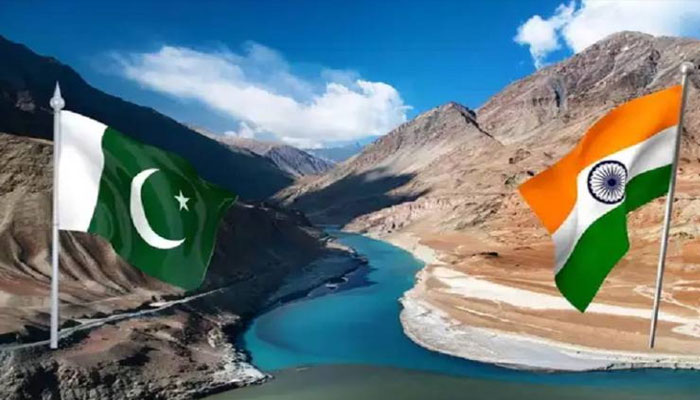
The Indus Waters Treaty, mediated by the World Bank in 1960, divides control of the Indus basin rivers between Pakistan and India.
Manzoor accused India of illegally placing the treaty in abeyance and warned that unilateral actions regarding transboundary waters could escalate tensions and threaten regional peace and stability.
Under the treaty, Pakistan has rights over the western rivers namely Indus, Jhelum, and Chenab for irrigation, drinking water, and non-consumptive uses such as hydropower generation, while India controls the eastern rivers Ravi, Beas, and Sutlej.
He further said hat India had committed material breaches of the treaty, citing abrupt decrease in the flow of the Chenab River from April 30 to May 21 and from December 7 to December 15 last year.
“These reduction in water flows are of extreme concern for Pakistan as they pointed to unilateral release of water by India into the River Chenab without prior notification or information-sharing, as required under the treaty,” he said.
He added that such actions occured at a critical stage of Pakistan’s agricultural cycle and directly threatened livelihoods, food security, and the economy.
Ambassador Manzoor, who also served in Saudi Arabia and Egypt as top diplomat of Pakistan, said India’s recent actions demonstrated the weaponization of water, an issue Pakistan had repeatedly raised before the international community.
He said Pakistan’s Indus Water Commissioner had written to his Indian counterpart seeking clarification on the matter of reducing of Chanab water under the provisions of the treaty.
Pakistan, he said, expected India to respond to the concerns raised by Pakistan’s Indus Water Commissioner in clear term, asking New Delhi for refrain from unilateral manipulation of river flows, and fulfill its obligations under the treaty in both letter and spirit.
Prof Dr. AH Hilali, former chairman of the Political Science Department at the University of Peshawar, said India could not unilaterally place the treaty in abeyance and had lost legal grounds following the ruling of the International Court of Arbitration at The Hague.
He accused India of attempting to undermine the treaty by constructing projects such as the Kishenganga and Ratle hydropower projects illegally, calling the move a dangerous precedent.
He said India had weakened the treaty’s dispute resolution mechanism by refusing to participate in the Court of Arbitration and neutral expert proceedings.
He said that India was deliberately attempting to sabotage the arbitration process under the treaty and exposing millions of people in Pakistan to hunger and deprivation.
Pakistan and India have long disputed hydroelectric projects on the shared Indus river system, with Pakistan maintaining that Indian hydropower projects could reduce water flows and adversely affect agriculture in Pakistan.
In August last year, the Court of Arbitration ruled that India must “let flow” the waters of the western rivers for Pakistan’s unrestricted use.
He reiterated that the Indus Waters Treaty was a binding legal instrument that had contributed significantly to peace and stability in South Asia and could not be withdrawn unilaterally.
He warned that restricting water supplies would expose millions of people in Pakistan to hunger and starvation.
The experts said violations of the IWT threatened not only the sanctity of international treaties but also regional peace, security, good neighbourly relations, and established norms governing relations between states.
They expressed hope that the international community and the World Bank as well as International community, would intervene to compel India to reverse its unilateral decisions and ensure the unrestricted flow of water in the western rivers.