











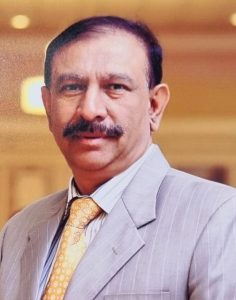
By Brig Syed Karrar Hussain Retired
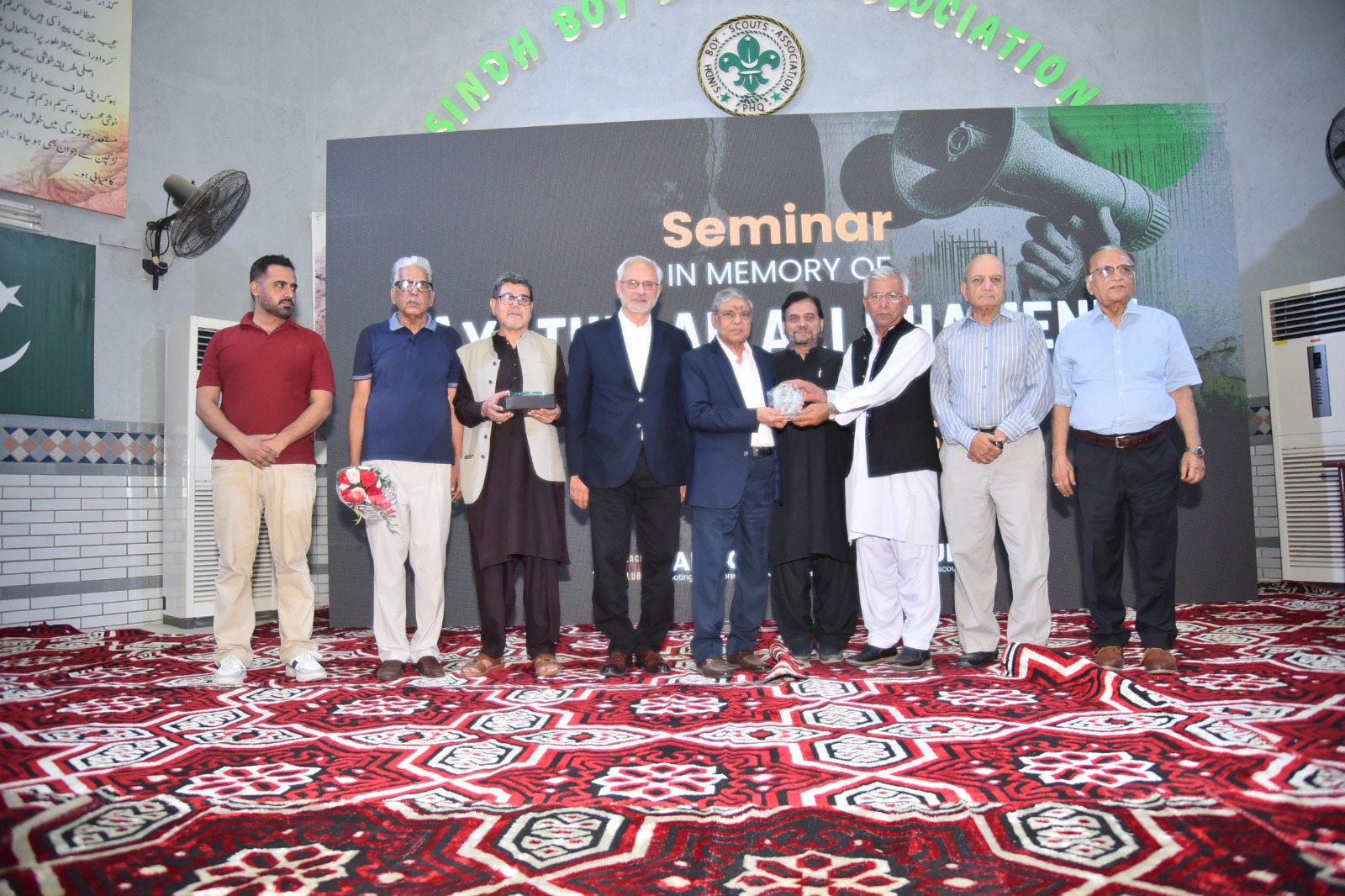
Karachi witnessed a significant intellectual and ideological gathering today, as scholars, journalists, analysts, and members of civil society assembled to commemorate and reflect upon the life, leadership, and contributions of the Iranian Supreme Leader, Ayatollah Ali Khamenei, who was remembered in the seminar as a symbol of استقامت (resistance), استقلال (independence), and اسلامی قیادت (Islamic leadership). The seminar, organized by the Karachi Editors Club under the stewardship of prominent media figures including Mubashir Mir and Mazhar Naqvi along with their dedicated team, turned into a thought-provoking forum where participants revisited the ideological foundations and political journey of a leader who has shaped Iran’s domestic and foreign policy for decades.
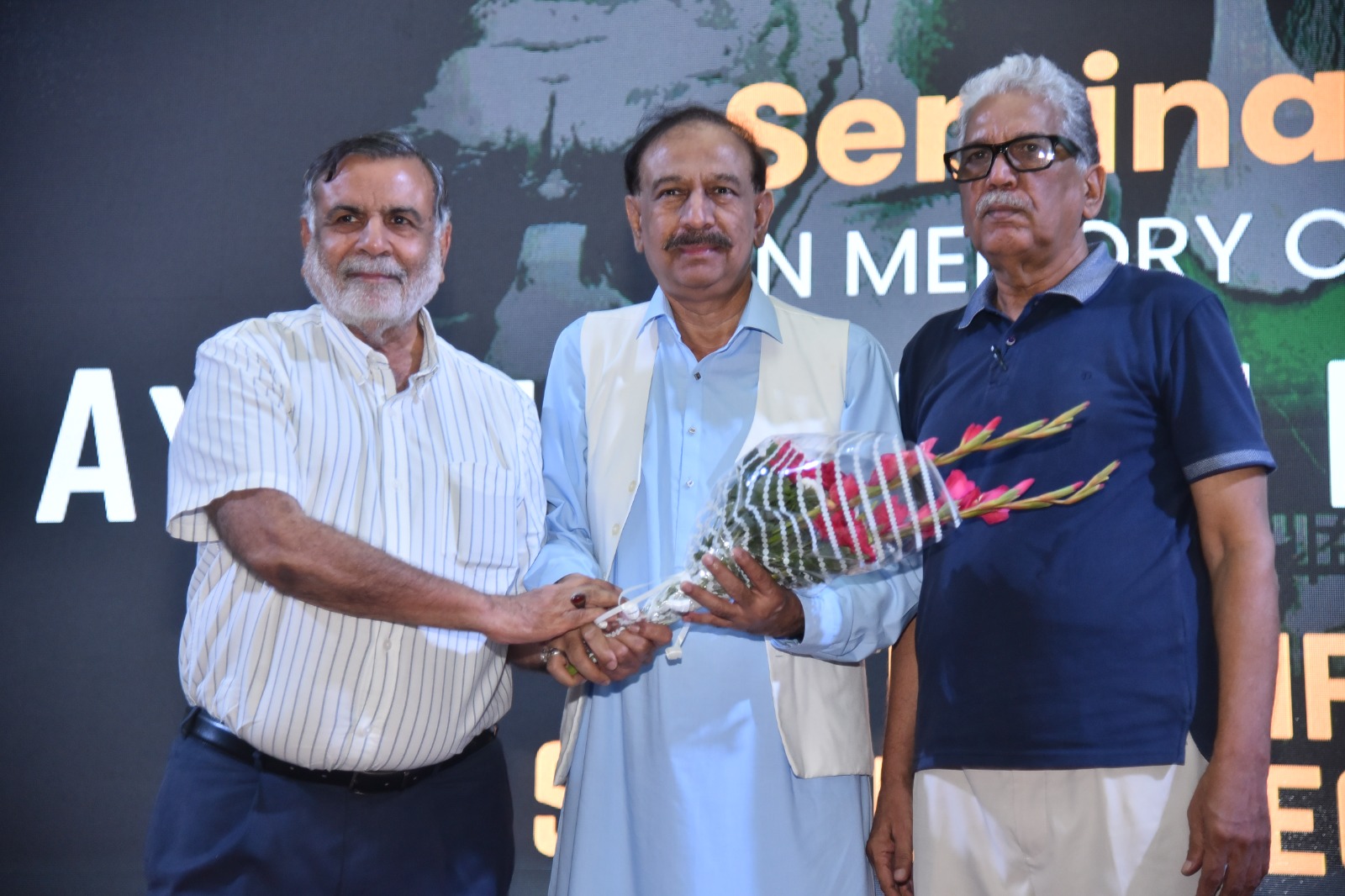
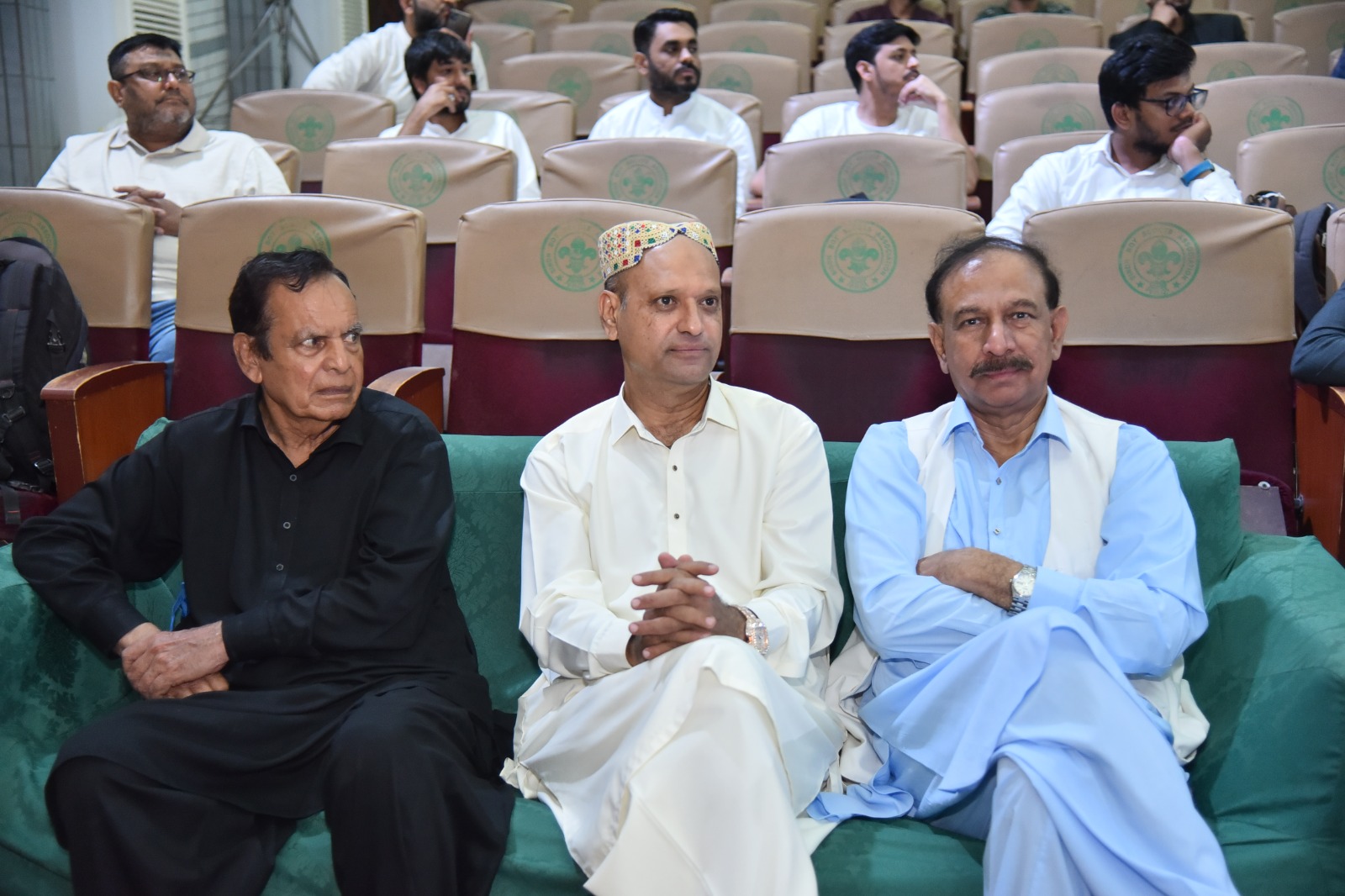
The event was attended by a large number of intellectuals, journalists, students, and members of the public, reflecting the deep interest within Pakistani society regarding developments in the Muslim world, particularly in the Middle East. Among the distinguished attendees was renowned journalist and Editor of Daily News Lark, Jawaid Malik, whose presence added further significance to the gathering.
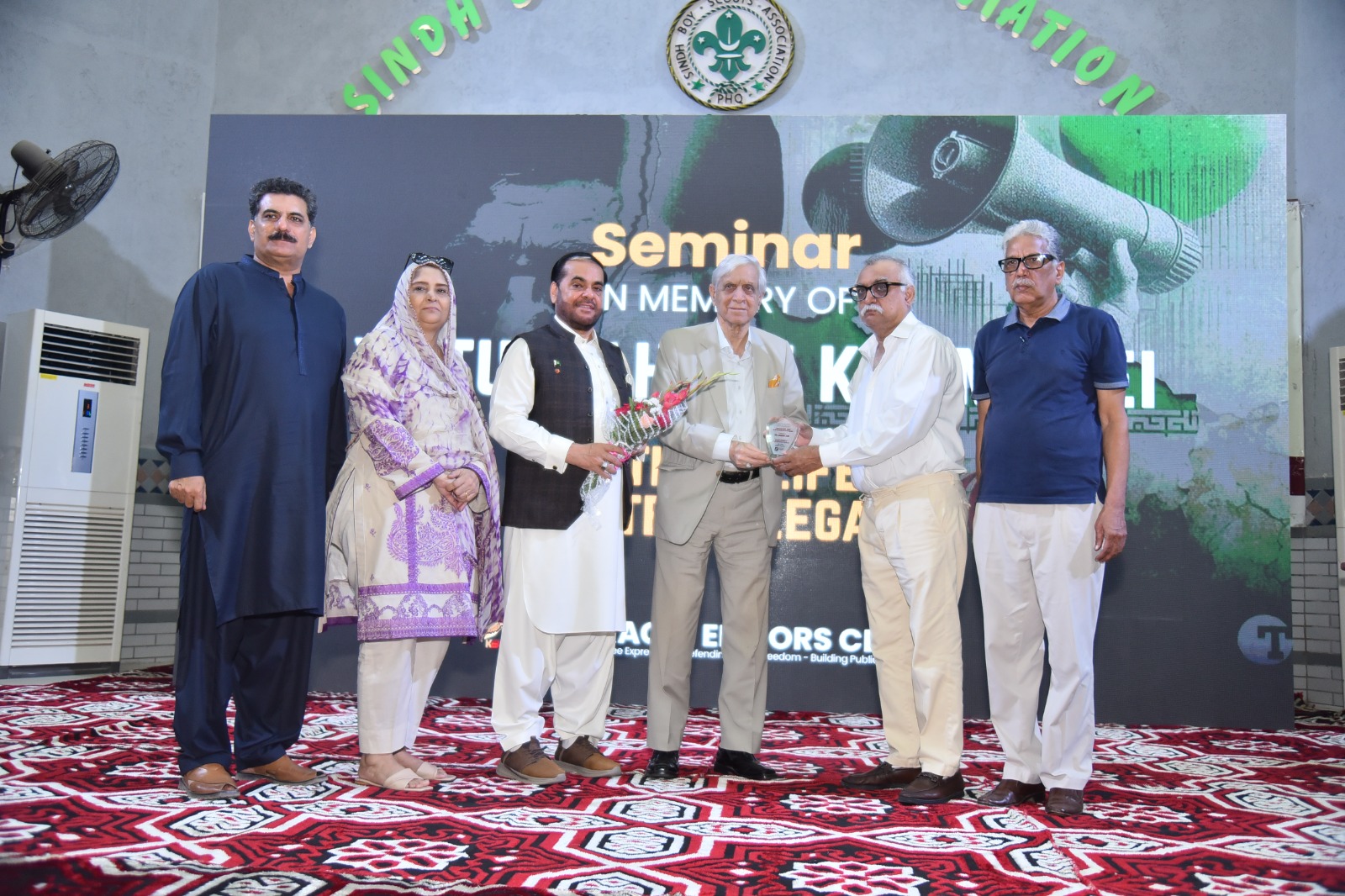
The seminar commenced with a recitation from the Holy Quran, setting a solemn and reflective tone for the proceedings. This was followed by an introductory address by the organizers, who highlighted the purpose of the seminar—to analyze the ideological vision, leadership qualities, and global impact of Ayatollah Khamenei. The speakers emphasized that in an era marked by geopolitical turmoil and ideological confusion, leaders who stand firm on principles of sovereignty and resistance deserve close study and reflection.
One of the keynote speakers, former Federal Minister Aniq Ahmed, delivered a comprehensive address on the political and ideological journey of Ayatollah Khamenei. He traced his rise from a religious scholar to one of the most influential leaders in the Muslim world. Aniq Ahmed underlined that Ayatollah Khamenei’s leadership has been defined by steadfastness in the face of immense external pressures, particularly from Western powers. He remarked that the Iranian leader successfully transformed challenges into opportunities, strengthening Iran’s internal cohesion and regional influence.
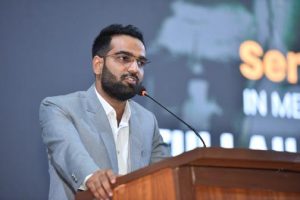
Brigadier Syed Karrar Hussain Shah (Retired), a respected defense analyst and seasoned military officer, also addressed the seminar and provided a strategic perspective on Ayatollah Khamenei’s leadership. Drawing from his extensive experience in national security and international affairs, Brigadier Karrar Hussain emphasized that Ayatollah Khamenei’s approach to governance has been deeply rooted in the principles of self-reliance, national dignity, and strategic patience. He pointed out that under Khamenei’s leadership, Iran has developed a robust defense posture, enabling it to withstand sanctions, external threats, and hybrid warfare tactics.
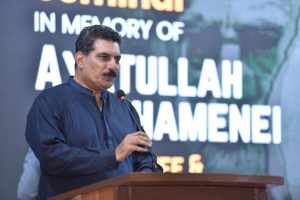
Brigadier Karrar further elaborated that the concept of “resistance” as propagated by Ayatollah Khamenei is not merely military in nature but encompasses economic resilience, cultural identity, and intellectual independence. He noted that such a comprehensive approach is essential for any nation aspiring to safeguard its sovereignty in the contemporary global order. He also stressed the importance of learning from Iran’s experiences, particularly in developing indigenous capabilities and maintaining unity in the face of adversity.
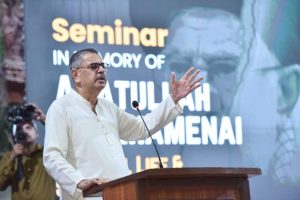
The seminar also featured remarks from various scholars and analysts like Mr Nazir Laghari and Ambessidor Hassan Habib
also shed light on different dimensions of Ayatollah Khamenei’s personality and leadership. Some speakers focused on his religious scholarship and his role in promoting Islamic values, while others highlighted his political acumen and ability to navigate complex international dynamics. It was widely acknowledged that Ayatollah Khamenei has played a pivotal role in shaping Iran’s foreign policy, particularly in supporting causes that resonate across the Muslim world.
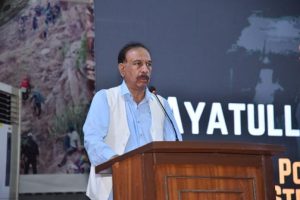
A recurring theme throughout the seminar was the emphasis on unity within the Muslim Ummah. Speakers argued that leaders like Ayatollah Khamenei have consistently advocated for greater cooperation among Muslim countries, urging them to rise above sectarian and political differences. They stressed that the challenges faced by the Muslim world today—ranging from political instability to economic dependency—require collective efforts and visionary leadership.
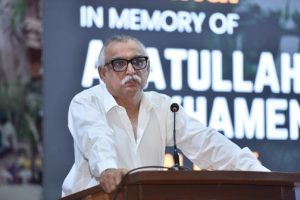
The organizers, Mubashir Mir and Mazhar Naqvi, were widely appreciated for their efforts in arranging such a meaningful and timely seminar. Participants acknowledged that forums like these play a crucial role in fostering informed dialogue and critical thinking among the public. By bringing together experts from diverse fields, the Karachi Editors Club succeeded in creating an environment conducive to intellectual exchange and constructive debate.
The presence of senior journalists like Jawaid Malik further enriched the discussion, as media professionals play a key role in shaping public opinion and disseminating knowledge. It was emphasized that responsible journalism is essential for promoting awareness and countering misinformation, particularly in an age where narratives are often manipulated for political purposes.
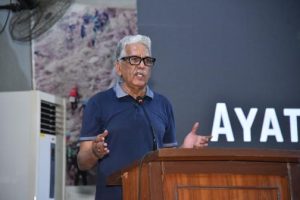
Another important aspect highlighted during the seminar was the need to study leadership models that emphasize moral integrity and ideological clarity. Speakers pointed out that Ayatollah Khamenei’s leadership style is characterized by simplicity, discipline, and a strong connection with the masses. Such qualities, they argued, are essential for building trust and legitimacy in any society.
The seminar concluded with a collective reflection on the lessons that can be drawn from Ayatollah Khamenei’s life and leadership. Participants agreed that while each country has its own unique circumstances, certain principles—such as self-reliance, unity, and adherence to core values—are universally applicable. They expressed hope that continued dialogue and engagement on such topics would contribute to greater understanding and cooperation within the Muslim world.
In conclusion, the seminar organized by the Karachi Editors Club served as a powerful reminder of the importance of leadership grounded in principles and resilience. By examining the life and contributions of Ayatollah Khamenei, the speakers and participants not only paid tribute to a prominent figure but also engaged in a broader discussion on the future of the Muslim Ummah. The event underscored the need for intellectual engagement, critical analysis, and a renewed commitment to the values that unite and strengthen societies.
Such gatherings are vital in today’s world, where information is abundant but understanding is often limited. By creating spaces for meaningful dialogue, organizations like the Karachi Editors Club are contributing to the development of a more informed and thoughtful society—one that is better equipped to navigate the complexities of the modern world while staying true to its core principles.