














By Brig Syed Karrar Hussain Retired
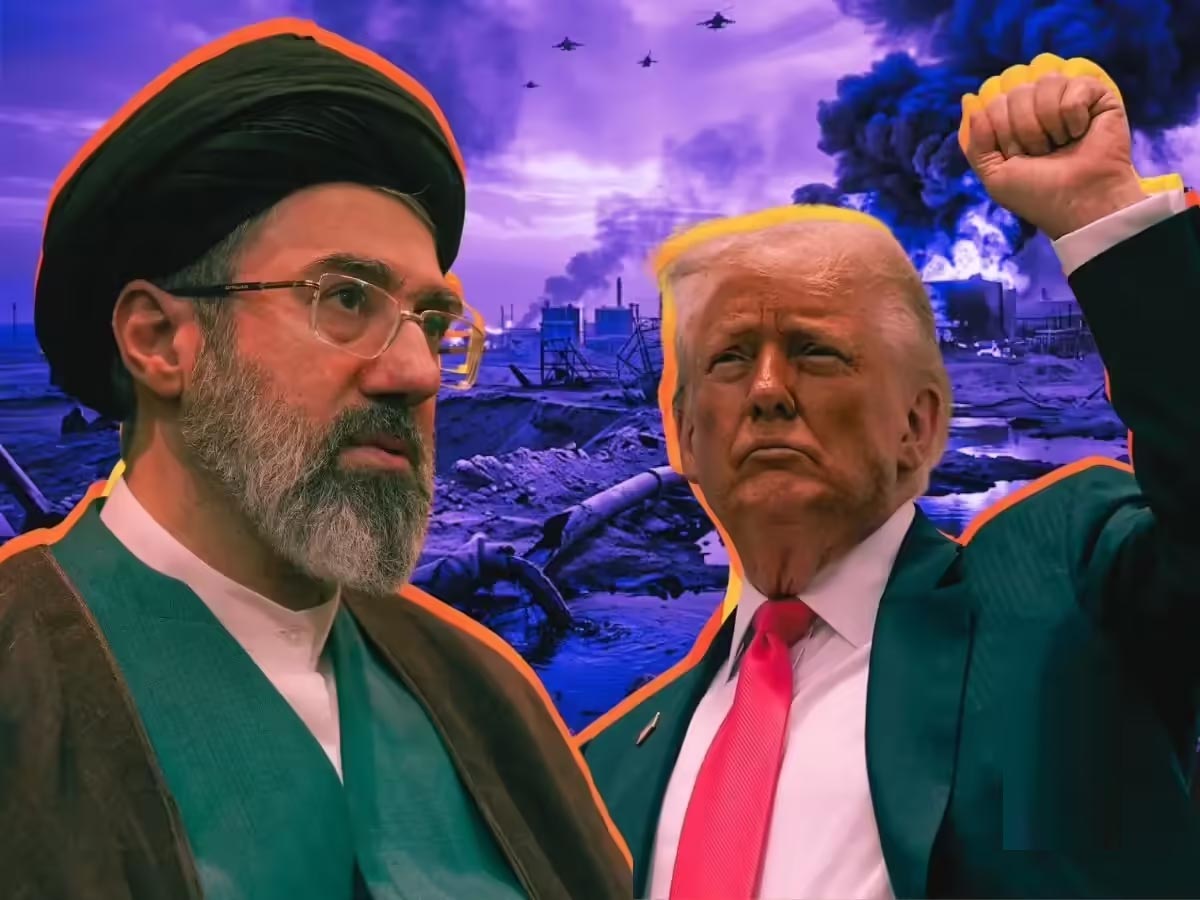
The recent ceasefire dialogue between Iran and the United States has entered a highly sensitive and decisive phase. After the first round of negotiations in Islamabad ended without agreement, global attention has now shifted toward the possibility of a second round—once again potentially hosted by Pakistan. While diplomatic channels remain open, the situation on the ground continues to deteriorate, with military escalation, economic disruption, and geopolitical uncertainty shaping the environment in which negotiations are unfolding.
Trump’s Statement: Pakistan as the Next Diplomatic Hub
One of the most significant recent developments is the statement by former US President Donald Trump, indicating that the next round of talks may again take place in Pakistan, possibly within days.
Trump initially hinted at Europe as a potential venue but later expressed a preference for Pakistan, appreciating its diplomatic role and particularly acknowledging the efforts of Pakistan’s military leadership in facilitating dialogue. This shift reflects growing international recognition of Pakistan as a credible mediator capable of engaging both Washington and Tehran.
Pakistan has also formally proposed hosting another round of talks before the expiry of the current two-week ceasefire. This indicates that Islamabad is not merely a passive venue but an active diplomatic player seeking to prevent further escalation.
However, despite these positive signals, the reality remains that the first round of talks failed after 21 hours of intense negotiations, highlighting the depth of mistrust between the two sides.
Core Issue: No Major Change in Demands
A critical question is whether there has been any flexibility in the demands of either side. The answer, based on current developments, is largely negative.
United States’ Position
The US continues to maintain a hardline stance centered around strategic and security concerns. Its key demands include:
Complete halt to Iran’s uranium enrichment program
Long-term or permanent restrictions (up to 20 years) on nuclear activity
Limitation or dismantling of ballistic missile capabilities
Ending support for regional proxy groups
Free navigation through the Strait of Hormuz
Washington views Iran’s nuclear capability—especially enrichment up to 60%—as exceeding civilian requirements and posing a potential pathway to nuclear weapons. Therefore, the US insists on verifiable and long-term guarantees.
Iran’s Position
Iran, on the other hand, has shown limited flexibility and continues to defend its sovereignty and strategic interests. Its key demands include:
Recognition of its right to peaceful nuclear enrichment
Reduction of enrichment restrictions to a short-term framework (3–5 years) instead of long-term bans
Immediate lifting of economic sanctions
Release of frozen Iranian assets
War reparations and compensation
A broader regional ceasefire, including halting Israeli actions in Lebanon
Iran has rejected the US proposal of a 20-year halt to enrichment, offering instead a shorter compromise period. However, even this has not been accepted by Washington.
Conclusion on Demands
There is no significant shift in core demands from either side. Both continue to hold firm positions, making compromise difficult. The negotiations remain a classic case of security vs sovereignty, where neither side is willing to concede fundamental principles.
Escalation Overshadowing Diplomacy
While diplomatic efforts continue, the situation on the ground has worsened significantly.
Following the failure of talks, the United States has imposed a naval blockade on Iran, particularly targeting the strategically vital Strait of Hormuz.
This move has had immediate global consequences:
Disruption of nearly 20% of global oil supply routes
Oil prices rising above $100 per barrel
Increased risk of military confrontation
Iran has responded strongly, warning that any interference in the Strait would be treated as an act of war.
This escalation reflects a dangerous paradox: while talks are being planned, military pressure is simultaneously increasing, reducing trust and narrowing diplomatic space.
Expectations from the Upcoming Dialogue
Despite the challenges, there are still cautious expectations from the next round of talks.
1. Possibility of Ceasefire Extension
The most realistic short-term expectation is an extension of the current ceasefire. Both countries are facing internal and external pressures:
The US is dealing with rising fuel prices and domestic war fatigue
Iran is facing severe economic strain and internal unrest
These factors create incentives for both sides to avoid immediate escalation.
2. Incremental Confidence-Building Measures
Rather than a comprehensive agreement, the next dialogue may focus on:
Limited sanctions relief
Partial opening of the Strait of Hormuz
Temporary caps on nuclear enrichment
Humanitarian measures
Such incremental steps could help build trust and create a pathway toward a broader agreement.
3. Increased Role of Mediators
Pakistan’s role is expected to grow further, supported by other mediators such as Turkey and possibly Gulf states.
Pakistan’s balanced relations with both Iran and the United States position it uniquely to facilitate dialogue.
4. Risk of Breakdown
However, the risk of failure remains high. The previous talks collapsed primarily due to:
Unrealistic expectations from both sides
Lack of trust
Pressure from regional actors
Ongoing military activities
If these factors persist, the next round may also fail.
Strategic Analysis: What Lies Ahead
The Iran–US dialogue is not merely a bilateral issue; it is a global strategic contest involving energy security, regional influence, and nuclear proliferation.
Three possible scenarios can emerge:
Scenario 1: Limited Agreement (Most Likely)
A temporary arrangement that extends the ceasefire and introduces partial compromises without resolving core issues.
Scenario 2: Prolonged Deadlock
Continued negotiations without meaningful progress, accompanied by controlled escalation.
Scenario 3: Full Escalation (Worst Case)
Breakdown of talks leading to expanded war, disruption of global trade, and involvement of regional powers.
Given current trends, Scenario 1 or 2 appears more likely, while Scenario 3 remains a dangerous possibility.
Conclusion
The latest developments in Iran–US ceasefire dialogue reflect a complex mix of cautious diplomacy and aggressive posturing. President Trump’s indication of holding the next round in Pakistan underscores Islamabad’s emerging diplomatic importance. However, the fundamental disagreements between the two sides remain unchanged.
The United States continues to prioritize security and non-proliferation, while Iran insists on sovereignty and economic relief. The absence of flexibility on these core issues is the primary obstacle to peace.
The upcoming dialogue, therefore, should not be expected to produce a breakthrough agreement. Instead, its success will likely be measured by its ability to prevent further escalation, extend the ceasefire, and keep diplomatic channels alive.
In an increasingly volatile global environment, even maintaining dialogue is a significant achievement. The world now watches closely, hoping that diplomacy prevails over confrontation.