
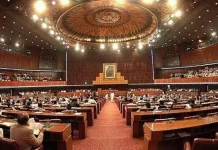















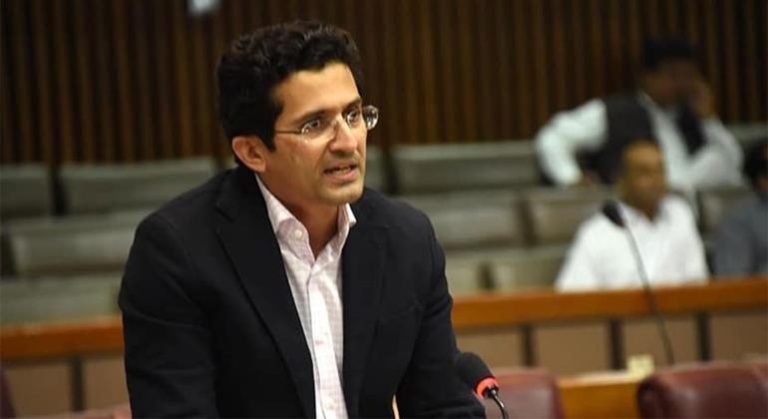
ISLAMABAD: Federal Minister for Petroleum and Natural Resources Ali Pervaiz Malik on Monday informed the National Assembly that the government had handled the recent global oil crisis responsibly, ensuring the availability of petroleum products while protecting vulnerable segments of society.
Speaking in the House, he said Pakistan meets nearly 80 percent of its energy requirements through imports, making it highly vulnerable to regional disruptions.
He added that tensions originating in a neighboring country had spread across the wider region, with repercussions being felt throughout the global economy.
“I will try to place a few facts before you regarding how this situation has unfolded and how its impact is extending to the wider world,” he said, adding that history would ultimately judge whether the government fulfilled its responsibilities.
The minister said the crisis was triggered by escalating regional tensions, particularly after the February 28 developments affecting the Strait of Hormuz, through which around 20 to 25 percent of the world’s oil supply passes.
He noted that key energy and industrial supplies — including diesel, LPG, LNG, fertilizers, and other chemical products — traditionally pass through the affected region, and disruptions in these routes have significantly impacted global supply chains. “As a result, prices of these commodities have surged multiple times worldwide,” he added.
Ali Pervaiz Malik said the government faced a difficult choice between ensuring fuel availability and maintaining lower prices, noting that several countries experienced shortages, rationing, and unrest at fuel stations.
He said Pakistan initially allowed partial transmission of international price increases to domestic consumers while mobilizing financial resources through austerity measures, expenditure reprioritization, and contributions from state-owned enterprises.
He informed the House that the government arranged over Rs100 billion to absorb price shocks and shield consumers for several weeks.
Highlighting the severity of the crisis, he said global crude oil prices surged from around $70 per barrel to as high as $170 per barrel within a short period, while diesel prices also rose sharply in international markets.
He said Pakistan’s long-standing supply arrangements, particularly with Kuwait, were disrupted, forcing the country to procure fuel from alternative markets at significantly higher premiums.
“Premiums increased from around $5 per barrel to as high as $60–70 per barrel, while shipping and insurance costs also surged manifold due to the conflict,” he added.
The minister said liquefied natural gas (LNG) supplies were also affected after suppliers declared force majeure, further complicating the situation.
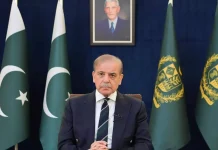
He said the government, under the leadership of Prime Minister Shehbaz Sharif, held extensive consultations with provincial governments, institutional stakeholders, and international partners to formulate a coordinated response. A high-level meeting at the Presidency, attended by President Asif Ali Zardari and senior civil and military leadership, reviewed the situation and finalized a unified strategy.
Ali Pervaiz Malik said the government adopted a targeted subsidy approach to protect vulnerable segments, including farmers, public transport users, and low-income groups, while allowing market-based adjustments for others. He added that essential supplies were kept uninterrupted, avoiding panic situations witnessed in other countries.
He maintained that the government’s timely and coordinated response helped the country navigate one of the most severe external oil shocks in recent history without major disruptions to the supply system.
The minister said blanket fuel subsidies, which had reached an unsustainable level of Rs50–60 billion per week, were replaced with a targeted relief programme to ensure fiscal stability. He noted that such subsidies disproportionately benefited affluent consumers due to higher fuel consumption.
He added that the subsidy volume, which had surged to nearly Rs200–300 billion per month, was significantly reduced in coordination with provincial governments, with resources redirected toward low-income groups, including motorcyclists, small shopkeepers, transport workers, and farmers.
The targeted subsidy programme, he said, was finalized after extensive consultations at the Prime Minister’s Office with key stakeholders, including President Asif Ali Zardari, Prime Minister Shehbaz Sharif, provincial chief ministers, and senior leadership.
He also acknowledged the input of leaders, including Maryam Nawaz Sharif, Murad Ali Shah, Sarfraz Bugti, Sohail Afridi and Bilawal Bhutto Zardari.
He said modern digital mechanisms were utilized to deliver subsidies directly to beneficiaries through e-wallets, based on verified data obtained from provincial excise departments.
Millions of transactions have already been processed under the supervision of the deputy prime minister, ensuring transparency and efficiency without long queues at fuel stations.
Highlighting international support, the minister thanked friendly countries, including Saudi Arabia, the United Arab Emirates, and Oman, for assisting Pakistan during the crisis. He said Saudi Arabia ensured uninterrupted crude oil supply through alternative routes, while the UAE facilitated arrangements via Fujairah Port outside the Strait of Hormuz. Oman also supported fuel shipments through its oil trading channels.
He added that, following disruptions in LNG supplies, including suspension from Qatar, the government arranged alternative sources and increased local gas supply to ensure uninterrupted availability for domestic consumers.
The minister warned that a global fertilizer shortage was emerging as another major challenge. However, under the directives of the prime minister, gas supply to domestic fertilizer plants was maintained to ensure uninterrupted production.
He added that fertilizer prices were kept stable at around Rs4,500 per bag, compared to sharp increases in neighboring countries where prices surged up to Rs15,000 per bag.
He also thanked Iran for facilitating the safe passage of stranded oil tankers through the Strait of Hormuz, ensuring timely delivery of shipments.
He said national resources, including the Pakistan National Shipping Corporation fleet, were mobilized, while local refineries operated at full capacity to sustain supply chains.
The minister said the government also prepared a digital rationing mechanism as a contingency plan to ensure orderly fuel distribution if required, avoiding panic and long queues.
He said targeted relief measures included financial support for motorcyclists and low-income commuters, with subsidies calculated based on daily fuel consumption needs. Pakistan Railways was directed to keep fares unchanged for lower-income passengers, while intercity transport operators also received support to limit fare increases.
He added that provincial governments implemented additional measures, including fare freezes and free or subsidized urban transport services, to facilitate commuters, students, and working-class citizens. Farmers were also provided targeted support, including subsidies of Rs1,500 per acre for landholdings of up to 25 acres, based on digitized land records.
Ali Pervaiz Malik said the government’s proactive approach ensured uninterrupted availability of essential commodities, avoided panic situations, and provided relief to the most affected segments while maintaining economic stability.
He expressed gratitude to coalition partners and opposition parties, particularly the Khyber Pakhtunkhwa government, for their constructive role during consultations.
He added that provincial governments also contributed by implementing energy conservation measures, including early market closures to reduce electricity consumption and reliance on expensive fuel-based power generation.