


















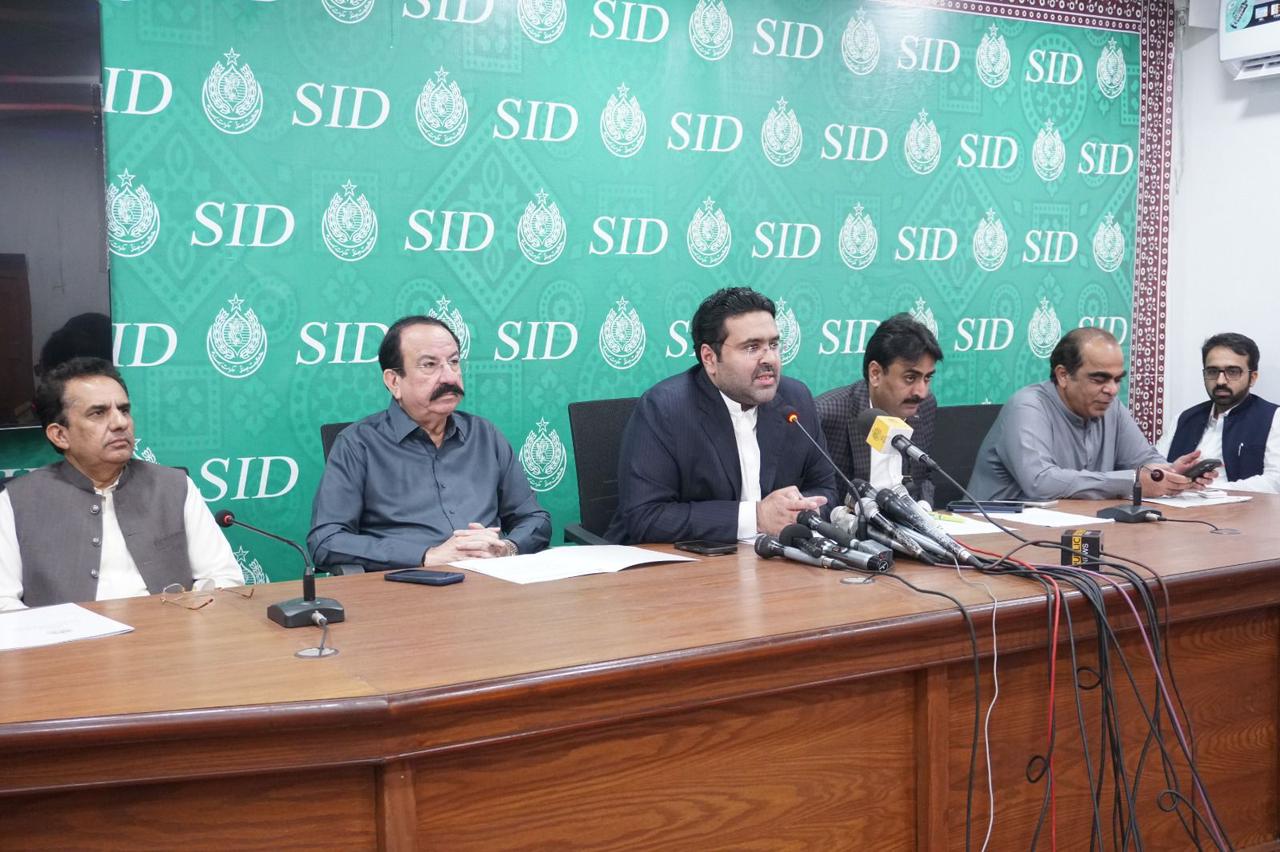
Karachi:The Sindh Cabinet Sub-Committee on Wheat Policy, comprising Provincial Minister for Food Makhdoom Mehboub-uz-Zaman, Provincial Minister for Irrigation Jam Khan Shoro, Provincial Minister for Excise Mukesh Kumar Chawla, and Advisor for Rehabilitation Gyan Chand Essrani, addressed a joint press conference to outline the Government of Sindh’s comprehensive wheat procurement strategy for the current season.
Speaking on the occasion, Provincial Minister for Food Makhdoom Mehboub-uz-Zaman announced that the Government of Sindh will procure 1 million metric tons of wheat, with a support price fixed at Rs. 3,500 per 40 kg. He stated that procurement will commence from April 1 across 109 designated procurement centers established throughout the province. The Food Minister highlighted that, for the first time, wheat procurement will be conducted exclusively through registered Hari Card holders, ensuring transparency, accountability, and direct benefit to farmers. He informed that approximately 330,000 registered farmers will benefit under this initiative.
In a significant policy shift, the government will not issue bardana (gunny bags) this year. Instead, farmers will bring their own bardana and will be provided an incentive of Rs. 60 per bag, which will be disbursed through Sindh Bank directly to their accounts. This measure will eliminate unnecessary logistical burdens and ensure ease of procurement for farmers. Makhdoom Mehboub-uz-Zaman further stated that the Sindh Government has already provided a substantial subsidy of Rs. 84 billion to stabilize wheat prices and support the public during the holy month of ramadan. He emphasized that wheat release and distribution have been carried out in a fully transparent manner, particularly during the month of Ramazan, ensuring availability of flour at affordable rates across the province.
Addressing concerns regarding irregularities, the Food Minister reiterated the government’s zero tolerance policy, stating that 43 officers were issued show-cause notices, 22 were suspended, 9 were dismissed from service, and 6 cases were referred to Anti-Corruption Establishment, reflecting strict accountability measures.
Provincial Minister Jam Khan Shoro clarified that the Food Department had complete data of approximately 1.2 million metric tons of wheat stock, dismissing allegations of wheat theft reported in sections of the media. He explained that wheat procured by Sindh was stored in Punjab warehouses due to logistical considerations and was strategically released during Ramazan to meet public demand. He added that approximately 200,000 metric tons of wheat stock is still available and will be utilized prudently.
He further informed that Sindh produces approximately 4.3 million tons of wheat annually, and the current procurement policy has been designed to protect farmers’ interests, especially small growers who had earlier received subsidies in the form of DAP and urea fertilizers. Provincial Minister Mukesh Kumar Chawla noted that the Hari Card initiative has already delivered tangible benefits to farmers through subsidized inputs and will now ensure fair procurement directly from genuine cultivators.
The Food Minister also announced that a dedicated digital portal/website will be launched jointly by the Food and Agriculture Departments to streamline procurement, data management, and transparency. The ministers emphasized that the wheat policy has been formulated in line with the vision of the Government of Sindh leadership, aimed at strengthening institutions, ensuring food security, and providing maximum relief to both farmers and consumers. Food minister further stated tha the Government of Sindh its commitment to maintaining a stable wheat supply chain, supporting farmers, and ensuring affordability of flour across the province