

















By Brig Syed Karrar Hussain Shah Retd
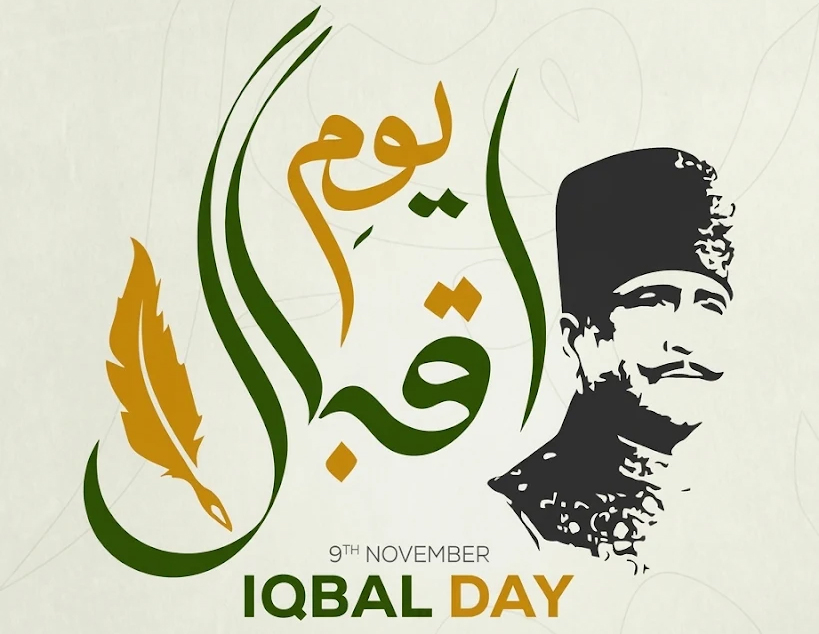
Every nation has individuals whose thoughts transcend their own time and become guiding lights for generations to come. Allama Muhammad Iqbal was one such extraordinary personality. Born on November 9, 1877, in Sialkot, Iqbal was not merely a poet, philosopher and political thinker; he was a visionary who awakened the political consciousness of the Muslims of the Indian subcontinent and inspired them to rediscover their identity, dignity and glorious heritage.
As Pakistan celebrates his birth anniversary, it is essential to revisit his remarkable vision, particularly his dream of a separate Muslim homeland, his aspirations for the unity of the Muslim Ummah, and his passionate belief in the intellectual and spiritual potential of Muslim youth.
The Dream That Inspired Pakistan
Allama Iqbal occupies a distinguished place in the intellectual history of the Pakistan Movement. His historic Presidential Address at the annual session of the All-India Muslim League in Allahabad on December 29, 1930, was a defining moment in the political evolution of the Muslims of the subcontinent.
In this address, Iqbal proposed the consolidation of Punjab, the North-West Frontier Province (now Khyber Pakhtunkhwa), Sindh and Balochistan into a single Muslim-majority political unit in north-western India.
His vision was rooted in the conviction that Muslims were not merely a religious minority but a distinct community with their own spiritual values, historical traditions, cultural identity and social aspirations.
He believed that political freedom was essential for Muslims to organise their collective lives in accordance with their religious and cultural ideals.
Iqbal’s dream was not simply about acquiring territory or establishing geographical boundaries. It was about creating a society based on justice, equality, human dignity, intellectual freedom and Islamic principles.
His vision subsequently became a major source of inspiration for Quaid-e-Azam Muhammad Ali Jinnah and the Pakistan Movement, which ultimately culminated in the establishment of Pakistan on August 14, 1947.
Pakistan was therefore not merely a political achievement; it represented the realisation of a historic aspiration nurtured by generations of Muslims and articulated with extraordinary intellectual depth by Iqbal.
The Unity of the Muslim Ummah: A Global Vision
Iqbal’s vision extended far beyond the geographical boundaries of the Indian subcontinent. His heart was deeply concerned with the condition of the entire Muslim world.
He witnessed the political decline, intellectual stagnation and disunity of Muslim nations. He believed that the strength of the Ummah lay in its collective identity, mutual cooperation and adherence to the universal teachings of Islam.
He strongly opposed divisions based on race, language, geographical nationalism and sectarian differences when these became obstacles to Muslim solidarity.
One of his most remarkable political and intellectual aspirations concerned the establishment of a permanent centre of cooperation among Eastern nations, particularly Muslim countries.
In his famous Urdu poem Jamaat-e-Aqwam-e-Mashriq, included in Zarb-e-Kaleem, he expressed his extraordinary vision through these memorable lines:
“تہران ہو گر عالمِ مشرق کا جنیوا
شاید کرۂ ارض کی تقدیر بدل جائے”
“If Tehran becomes the Geneva of the East,
Perhaps the destiny of the world may change.”
These lines reflected Iqbal’s desire for an effective international institution where Eastern and Muslim nations could coordinate their policies, resolve disputes, protect their collective interests and contribute towards global peace.
He wanted the Muslim world to develop its own intellectual, diplomatic and political strength rather than remain dependent on Western institutions and power structures.
Today, when Muslim countries face numerous challenges, including conflicts, economic dependencies, political rivalries and humanitarian crises, Iqbal’s message of collective strength and cooperation remains remarkably relevant.
The Shaheen: Iqbal’s Ideal Muslim Youth
Perhaps the most inspiring dimension of Iqbal’s philosophy is his message to young people.
He regarded youth as the greatest asset of any nation and believed that the future of the Muslim world depended upon educated, courageous, disciplined and visionary young men and women.
For this purpose, he frequently used the metaphor of the Shaheen (falcon).
The Shaheen represented freedom, self-respect, courage, ambition, independence and the ability to rise above ordinary limitations.
Iqbal wanted Muslim youth to develop strong character, intellectual curiosity, spiritual awareness and an unshakable commitment to their ideals.
He did not want them to become prisoners of comfort, dependency or blind imitation.
His famous verses convey this message beautifully:
“تو شاہیں ہے، پرواز ہے کام تیرا
ترے سامنے آسماں اور بھی ہیں”
“You are a falcon; soaring high is your destiny,
There are countless skies still waiting before you.”
Through this powerful symbolism, Iqbal encouraged young people to dream beyond conventional boundaries and pursue excellence in every field of life.
Another famous couplet reflects his philosophy of self-realisation:
“خودی کو کر بلند اتنا کہ ہر تقدیر سے پہلے
خدا بندے سے خود پوچھے، بتا تیری رضا کیا ہے”
Iqbal’s concept of Khudi, or selfhood, was not an invitation to arrogance. It was a call for self-awareness, moral strength, personal responsibility and spiritual development.
He believed that a nation could never achieve greatness if its young generation lacked confidence, knowledge, discipline and determination.
Rediscovering the Glorious Past of Muslims
Iqbal constantly reminded Muslims of their extraordinary historical contributions to civilisation.
He drew inspiration from the intellectual achievements of Muslim scholars, scientists, philosophers, historians and explorers who had transformed the world through their knowledge and discoveries.
From Baghdad to Cordoba, from Damascus to Bukhara, Muslim civilisation had once been a centre of scientific research, medical advancement, mathematics, astronomy, philosophy, architecture and literature.
Muslim scholars such as Al-Khwarizmi, Ibn Sina, Al-Biruni and Ibn Rushd made contributions that influenced generations of scholars across the world.
Iqbal wanted Muslim youth to study this glorious heritage, not merely to celebrate historical achievements but to understand the qualities that had made those achievements possible.
His message was clear: the past should be a source of inspiration, not an excuse for complacency.
He believed that Muslims had lost much of their intellectual leadership because they had abandoned the spirit of research, creativity, independent thinking and the pursuit of knowledge.
He therefore encouraged young Muslims to reconnect with the intellectual and spiritual foundations of their civilisation while embracing modern science, technology and education.
Iqbal’s Message for Contemporary Pakistan
Today, Pakistan stands at a critical stage of its national development. Our country possesses enormous human potential, natural resources, a strategically important geographical position and a proud history of sacrifices and achievements.
However, we continue to face challenges relating to education, economic stability, social justice, institutional development, national unity and intellectual progress.
These challenges demand a renewed commitment to Iqbal’s philosophy.
Our educational institutions must produce thinkers, scientists, entrepreneurs, responsible citizens and leaders of character. Our young generation must be equipped with modern knowledge while remaining connected to its cultural, moral and spiritual roots.
Pakistan must also play a constructive role in promoting peace, cooperation and solidarity among Muslim countries.
The spirit of Iqbal’s message demands that we rise above personal interests, political divisions and narrow considerations and work towards a common national purpose.
His philosophy also reminds us of the Quranic principle:
“إِنَّ اللَّهَ لَا يُغَيِّرُ مَا بِقَوْمٍ حَتَّىٰ يُغَيِّرُوا مَا بِأَنْفُسِهِمْ”
“Indeed, Allah does not change the condition of a people until they change what is within themselves.” (Surah Ar-Ra’d, 13:11)
This divine message beautifully complements Iqbal’s philosophy of self-transformation and collective progress.
Conclusion: The Poet Whose Dream Must Remain Alive
Allama Muhammad Iqbal passed away on April 21, 1938, nine years before the creation of Pakistan. Yet his intellectual legacy continues to guide the nation.
He dreamed of a politically independent Muslim homeland, a united and influential Muslim Ummah, an intellectually vibrant civilisation and a generation of Shaheens capable of conquering new horizons.
His message was not confined to poetry or historical celebrations. It was a call for action, character-building, education, unity and national reconstruction.
On his birth anniversary, we must ask ourselves whether we are truly following the ideals he presented before the Muslim nation.
Are we educating our youth to become Shaheens? Are we strengthening national unity? Are we contributing to the progress of the Muslim world? Are we building a Pakistan based on justice, knowledge, integrity and dignity?
Iqbal gave us the dream, Quaid-e-Azam transformed that dream into political reality, and the responsibility to fulfil its true spirit now rests with us.
Let us rediscover Iqbal, understand his philosophy and transform his vision into reality.
Pakistan does not merely need admirers of Iqbal; it needs a generation that lives by Iqbal.