





















By Brig Syed Karrar Hussain (Retired)
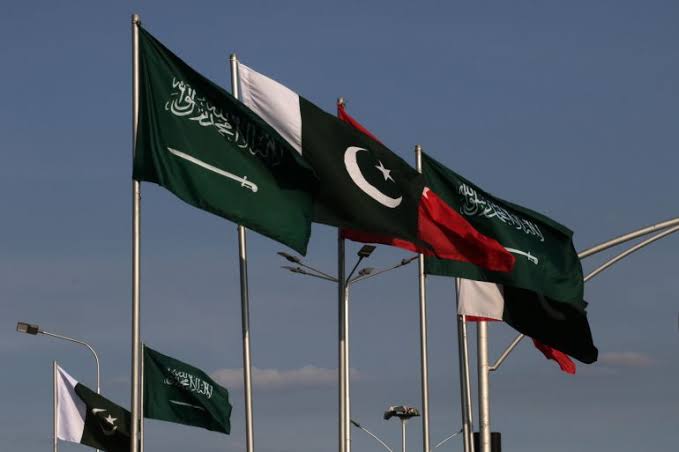
The signing of the Mecca Joint Defence Agreement by Pakistan, Türkiye and Saudi Arabia marks an important development in the evolving security landscape of the Muslim world. Signed on August 8, 2026, the agreement brings together three strategically significant countries possessing complementary military, economic and technological strengths. Its central principle is that an armed attack against any one of the three countries will be treated as an attack against all three. Turkish Foreign Minister Hakan Fidan has described the arrangement as technically comparable to NATO’s Article 5, although it should not yet be regarded as a NATO-style alliance in the institutional sense.
Background
The agreement is not an isolated development but the culmination of years of growing strategic cooperation among Pakistan, Türkiye and Saudi Arabia. Pakistan and Saudi Arabia have enjoyed close defence relations for decades. Their partnership was further formalised through the Strategic Mutual Defence Agreement signed in September 2025, under which aggression against either country would be considered aggression against both.
Pakistan and Türkiye, meanwhile, have maintained a longstanding strategic partnership encompassing defence production, military training, exercises and defence technology. Their relationship has increasingly acquired a defence-industrial dimension, while both countries have repeatedly expressed support for greater cooperation among Muslim states.
The trilateral arrangement was under discussion for almost a year before its finalisation. In January 2026, Pakistan confirmed that a draft agreement had already been prepared and was being considered by all three governments.
The timing of the agreement is particularly significant. The Middle East is experiencing a period of extraordinary instability, with tensions involving Iran, Israel, the United States, Yemen and the Gulf region creating serious security concerns. The agreement therefore reflects not merely bilateral friendships but a broader desire for collective deterrence and strategic coordination.
Salient Features
The most important feature of the pact is its collective-defence principle. An attack on one member is to be treated as an attack on all. This gives the agreement considerable deterrent value and creates a framework for coordinated military responses.
Secondly, the three countries bring different but complementary strategic capabilities. Pakistan possesses extensive conventional military experience and a nuclear deterrent; Türkiye has a sophisticated defence industry, advanced drone technology and NATO membership; while Saudi Arabia contributes enormous economic resources, strategic geography and increasing defence capabilities.
Thirdly, the agreement seeks to institutionalise defence cooperation through a ministerial mechanism and a permanent secretariat in Saudi Arabia. Further operational details are expected to be developed through the relevant committees.
Fourthly, the agreement does not replace existing bilateral or multilateral arrangements. It is intended to complement them. Pakistani officials have also emphasised that the arrangement is defensive rather than directed against any particular country. Turkish Foreign Minister Hakan Fidan has similarly stated that the pact is not aimed at Iran or any other state.
Finally, the agreement could potentially become wider. Turkish President Recep Tayyip Erdogan has indicated that other countries could eventually participate, while Egypt has already been mentioned as a possible future partner.
Impact on the Middle East and Surrounding Regions
The agreement will inevitably influence the strategic calculations of countries across the Middle East and South Asia.
For Saudi Arabia, the pact provides an additional layer of strategic reassurance at a time when missile, drone and maritime threats have become increasingly important. For Pakistan, it strengthens its position as a major security partner of the Gulf while extending its strategic reach beyond South Asia. For Türkiye, it creates another mechanism through which Ankara can contribute to regional security while strengthening its relations with two major Muslim countries.
The agreement could also have implications for the security of the Red Sea, the Arabian Sea and the wider Gulf region. These waterways are vital to global energy supplies and international trade. Any improvement in collective maritime and air-security coordination could therefore have significance far beyond the three signatories.
However, there is also a potential downside. Regional alliances can produce a security dilemma: one country’s effort to increase its security may be interpreted by another as a threat. Iran, Israel and India will therefore closely monitor how the agreement develops. Indeed, the significance of the pact will depend less on its title and more on how its collective-defence clause is interpreted and implemented in future crises.
The agreement should consequently be used as an instrument of deterrence and stability rather than confrontation. Its greatest success would be achieved if it prevents conflict rather than becomes involved in one.
Will It Damage Pakistan–Iran or Türkiye–Iran Relations?
This is perhaps the most sensitive question.
Pakistan and Iran share a long border, deep historical and cultural links and important economic and security interests. Pakistan has repeatedly advocated peaceful relations with Iran and has sought to avoid becoming part of rival regional blocs. Türkiye likewise maintains extensive political, economic and historical relations with Iran.
Therefore, it would be unwise for either Pakistan or Türkiye to allow the new agreement to be interpreted as an anti-Iran alliance.
The statements of the three governments are important in this regard. Pakistan has described the pact as defensive, while Türkiye has explicitly stated that it is not directed against Iran.
Nevertheless, perceptions matter as much as intentions. If the alliance is subsequently used to justify military action against Iran, or if its structures become associated with offensive operations, bilateral relations with Tehran could deteriorate significantly. Pakistan, in particular, would face a difficult strategic dilemma because of its geographical proximity to Iran.
The wise policy would therefore be to maintain a parallel channel of dialogue with Tehran and reassure Iran that the agreement is designed to protect the sovereignty and territorial integrity of its members, not to threaten any neighbour.
Recommendations for Making the Pact Effective
First, the three countries should establish clear rules of engagement and precisely define what constitutes an armed attack under the agreement. Ambiguity could create unnecessary escalation during a crisis.
Second, a permanent trilateral secretariat should be established as soon as possible, with professional military and diplomatic representation.
Third, the members should develop joint mechanisms for air defence, counter-drone operations, cyber security, intelligence sharing, maritime security and counter-terrorism.
Fourth, regular military exercises should be conducted, but these should be clearly defensive in nature and transparently communicated to neighbouring states.
Fifth, the three countries should establish a crisis-management mechanism with direct communication among their military and political leaderships. Such a hotline could prevent misunderstandings from turning into military confrontation.
Sixth, Pakistan and Türkiye should continue diplomatic engagement with Iran. The existence of a defence pact should never become a substitute for diplomacy.
Seventh, economic cooperation should accompany defence cooperation. Strategic stability cannot be sustained by military power alone; trade, investment, energy cooperation and regional connectivity are equally important.
Finally, the pact should remain inclusive rather than exclusive. If its ultimate objective is peace and stability in the Muslim world, it should encourage dialogue among regional powers rather than create new dividing lines.
Conclusion
The Pakistan–Türkiye–Saudi Arabia Defence Pact is a significant strategic development with the potential to reshape security calculations from South Asia to the Middle East. Its strength lies in the complementary capabilities of its three members and in the political message of collective security.
But alliances become successful not merely through military strength; they succeed through wisdom, restraint and diplomacy. The real test of the Mecca Joint Defence Agreement will not be how effectively it prepares the three countries for war, but how effectively it prevents war.
If Pakistan, Türkiye and Saudi Arabia can combine military deterrence with diplomacy, economic cooperation and respect for the sovereignty of neighbouring states, the agreement could evolve into an important pillar of regional stability. If, however, it becomes perceived as an instrument of confrontation, it could deepen existing divisions.
The ultimate objective should therefore remain clear: collective security without collective confrontation, strategic deterrence without unnecessary escalation, and Muslim solidarity without creating new regional rivalries.