

















By Brig Syed Karrar Hussain (Retired)
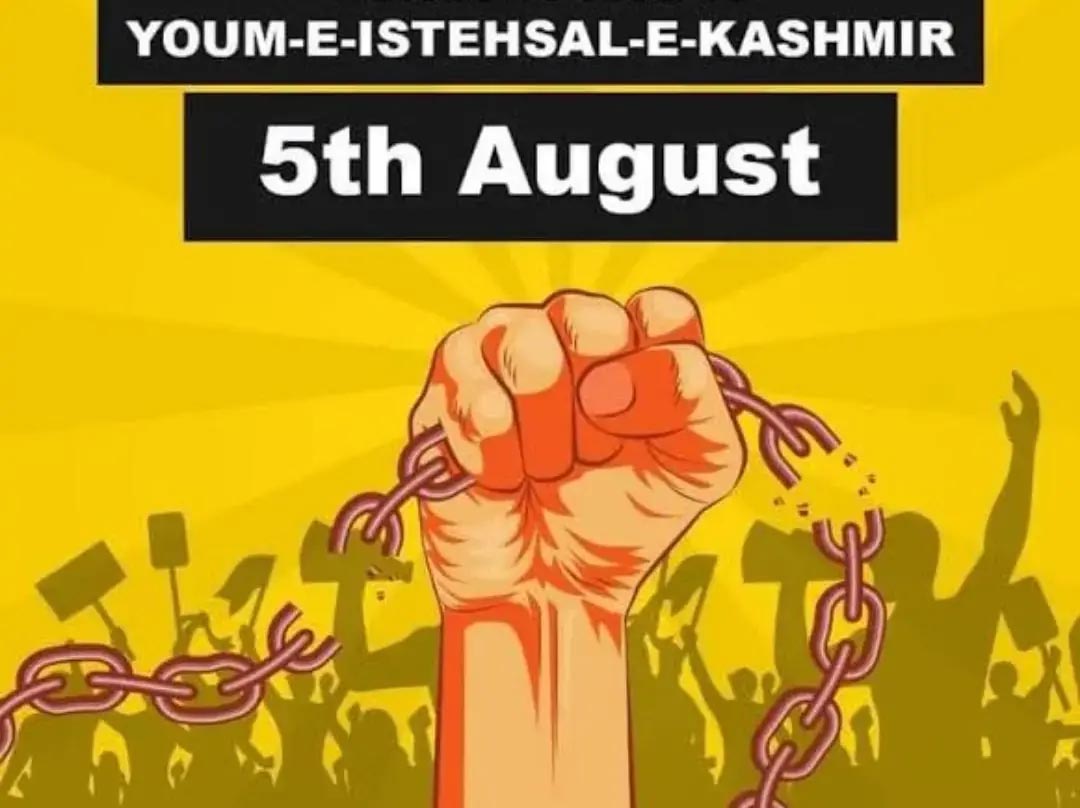
Every year, 5 August is observed in Pakistan and by many Kashmiris across the world as Kashmir Exploitation Day (Youm-e-Istehsal). The day commemorates one of the most significant and controversial developments in the history of the Jammu and Kashmir dispute. On 5 August 2019, the Government of India revoked the special constitutional status of Jammu and Kashmir by abrogating Articles 370 and 35A of its Constitution. The move fundamentally altered the legal and political status of the region and triggered widespread concern among Kashmiris and the international community.
For Pakistan, Kashmir Exploitation Day is not merely a political observance; it is a reminder of the suffering of the Kashmiri people and a reaffirmation of Pakistan’s longstanding support for their internationally recognized right to self-determination. The day also serves as an appeal to the global community to play a more active role in resolving one of the world’s oldest unresolved disputes.
The Kashmir issue dates back to the partition of British India in 1947. According to the United Nations, the people of Jammu and Kashmir were to determine their future through a free and impartial plebiscite under UN supervision. However, despite the passage of decades and the adoption of several UN Security Council resolutions, the promised plebiscite has never taken place. As a result, generations of Kashmiris have continued to live amid political uncertainty, conflict, and instability.
The events of 5 August 2019 marked a turning point. India not only revoked the region’s autonomous status but also reorganized Jammu and Kashmir into two Union Territories directly administered by New Delhi. Simultaneously, strict security measures were imposed across the region. Internet and communication services were suspended, political leaders were detained, public gatherings were restricted, and curfews were enforced. These developments attracted significant international attention and generated debates regarding human rights, civil liberties, and regional stability.
Pakistan strongly rejected these actions, arguing that they violated relevant UN Security Council resolutions and altered the internationally disputed status of Jammu and Kashmir without the consent of its people. Islamabad also maintained that no unilateral action could change the legal character of the territory under international law.
Beyond political considerations, the humanitarian dimension remains central to the Kashmir dispute. Reports by international human rights organizations have repeatedly highlighted concerns regarding restrictions on freedom of expression, arbitrary detentions, limitations on media access, and the broader human rights situation in the region. Many Kashmiri families have experienced prolonged uncertainty, while young people continue to grow up in an environment marked by tension and insecurity.
The consequences of the 2019 decision extend beyond Kashmir itself. South Asia is home to nearly one-fourth of the world’s population, and both Pakistan and India are nuclear-armed states. Continued instability over Kashmir therefore has implications not only for regional peace but also for international security. Sustainable peace in South Asia cannot be achieved without addressing the legitimate aspirations of the people of Jammu and Kashmir through peaceful dialogue and in accordance with international law.
Pakistan has consistently maintained that it seeks a peaceful resolution of the dispute through dialogue, diplomacy, and adherence to the principles enshrined in the United Nations Charter. The country’s position is that lasting peace depends upon respecting the rights and wishes of the Kashmiri people rather than imposing unilateral political arrangements.
The international community also has an important role to play. While many countries encourage bilateral dialogue between Pakistan and India, the humanitarian concerns associated with Kashmir deserve sustained international attention. Peaceful conflict resolution, respect for human rights, and the protection of civilian populations remain fundamental principles of the international order.
The United Nations, in particular, carries a unique responsibility because the Kashmir dispute remains on the agenda of the UN Security Council. The credibility of international institutions depends upon the consistent application of international law and previously adopted resolutions. Therefore, renewed diplomatic engagement is essential.
Several constructive measures can contribute to reducing tensions and promoting a peaceful settlement:
The United Nations should encourage meaningful dialogue between Pakistan and India.
All parties should prioritize the protection of human rights and fundamental freedoms in Jammu and Kashmir.
International humanitarian and human rights organizations should be allowed appropriate access to assess conditions on the ground.
Confidence-building measures, including improved communication and humanitarian initiatives, should be promoted to reduce tensions.
The international community should encourage a peaceful, negotiated settlement that reflects the principles of the UN Charter and relevant Security Council resolutions.
Diplomatic efforts should remain focused on ensuring lasting peace, regional stability, and respect for the aspirations of the people directly affected by the dispute.
Kashmir Exploitation Day is therefore not simply about recalling the events of 5 August 2019. It is about reminding the world that unresolved conflicts continue to affect millions of lives. It is a day to reflect upon the importance of justice, human dignity, peaceful dialogue, and international responsibility.
History demonstrates that enduring peace cannot be achieved solely through constitutional changes, administrative decisions, or military measures. Lasting solutions emerge through dialogue, mutual respect, adherence to international law, and the willing participation of the people whose future is being decided.
As the world faces numerous geopolitical challenges, Kashmir should not be forgotten. The international community, particularly the United Nations, should renew its commitment to promoting peace, facilitating dialogue, and supporting efforts aimed at achieving a just and durable settlement. Such a settlement would not only help secure the rights and aspirations of the Kashmiri people but would also contribute significantly to peace, stability, and prosperity throughout South Asia.
On this Kashmir Exploitation Day, the message is clear: justice delayed is peace denied. The hopes of millions of Kashmiris continue to rest on the belief that international commitments will one day be translated into meaningful action, allowing the people of Jammu and Kashmir to determine their future peacefully, freely, and with dignity.