






















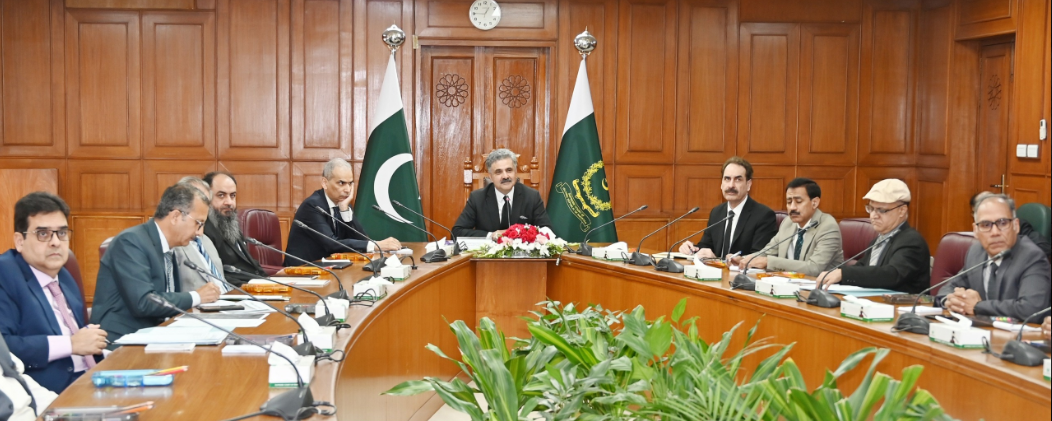
ISLAMABAD:Chief Justice of Pakistan, Justice Yahya Afridi on Tuesday chaired the tenth interactive session at the Supreme Court to review progress on judicial reforms, directing officials to accelerate key initiatives aimed at improving efficiency, transparency and public access to justice.
The meeting assessed monthly progress under the Reform Action Plan (RAP), focusing on reducing delays in case disposal, digitizing court processes and strengthening institutional performance.
Among those in attendance were Federal Ombudsman Naveed Kamran Baloch, the Supreme Court registrar, senior officials of the Law and Justice Commission of Pakistan, the Federal Judicial Academy and section heads of the apex court.
Officials briefed the meeting on steps taken to streamline case management, including categorization of cases, digitization of records, integration of IT systems and financial digitization of receipts and expenditures.
Progress on automation measures such as e-courts, QR-coded certified copies and data-driven decision-making tools was also reviewed, along with developments in alternative dispute resolution (ADR) and mediation programmes.
During the session, the federal ombudsman stressed the importance of introducing measurable performance benchmarks, including key performance indicators (KPIs) and disbursement-linked indicators (DLIs), to improve monitoring and accountability. The meeting was informed that work on this front was already underway.
The chief justice was told that over the past three months, 5,383 cases were disposed of against 3,600 new filings, reducing the total pendency to 34,083 cases. He appreciated the higher disposal rate, attributing it to improved case management and effective bench formation, and emphasised the need to maintain this momentum to enhance public confidence in the justice system.
The meeting also reviewed the status of jail petitions and death sentence appeals. It was noted that the number of pending death penalty cases has dropped significantly from 384 in October 2024 to 60. The court decided that all remaining death sentence appeals would be fixed for hearing within the next 30 days, while cases filed up to 2018 would be prioritised to clear the backlog.
Participants were informed that the introduction of a barcoding system for file tracking and case categorization is in progress and expected to be completed within a month. Digitization of records has largely been finalised, while e-payment facilities for certified copies and review petitions were already operational through the Public Facilitation Centre.
The centre has handled over 20,800 service requests in the last three months, reflecting increased reliance on digital services by litigants and lawyers. The chief justice directed that e-payment facilities be extended to all categories of court fees within a week and called for further expansion of online services to improve convenience and transparency.
Issues relating to branch registries also came under discussion, with instructions issued for their early resolution.
Reaffirming the judiciary’s commitment to a litigant-focused system, the chief justice said timely and effective adjudication is both a constitutional duty and a moral responsibility. He also acknowledged the cooperation of the legal fraternity in supporting digitization efforts and commended court staff for advancing the reform agenda.