














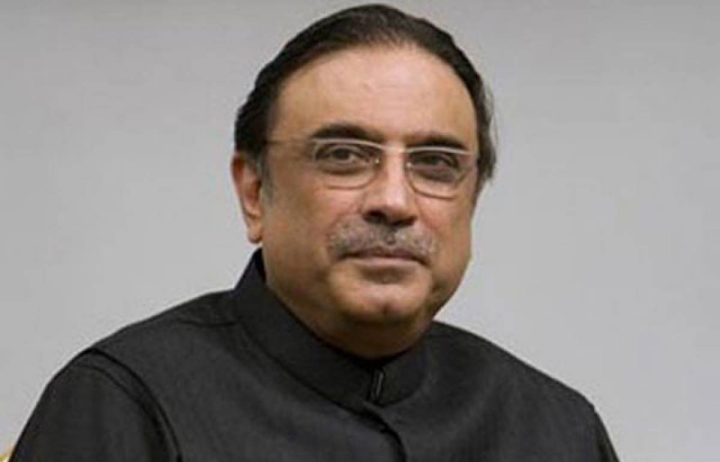
ISLAMABAD: President Asif Ali Zardari said the government was working to expand access to education and healthcare to women, strengthen economic opportunity and improve protection against violence.
In a message on the International Women’s Day (8 March 2026), he said, “On International Women’s Day, I extend my greetings and respect to the women of Pakistan and to women across the world.”
“Observed under the auspices of the United Nations, this day reminds us of the central role women play in the life of every nation. Quaid-e-Azam Muhammad Ali Jinnah made it clear that no country can progress without the full participation of its women. That principle remains relevant today and guides our efforts,” he added.
“Pakistan’s history reflects the strength and resolve of its women. We remember Shaheed Mohtarma Benazir Bhutto, who led the nation with courage and showed that women can serve at the highest levels of public life,” he said adding, “In public institutions, in the private sector and in communities across the country, women continue to contribute with dedication and skill.”
“From cockpits to tractor steering wheels, from intensive care units to classrooms, from sports fields to the floor of Parliament, Pakistani women have stepped forward wherever the nation has needed their talent and determination. They have taken part in public service and civic engagement and have also led historic democratic movements, including reaching the office of the Prime Minister. Their presence across these fields reflects commitment to national progress,” he continued.
He said, “We also recall Mohtarma Fatima Jinnah, who stood for constitutional rule and democratic values at a critical time and Begum Nusrat Bhutto, who endured hardship while defending democratic principles. Their courage strengthened the path for greater participation of women in public life.”
“Building on this legacy, Pakistan has ensured women’s representation in Parliament and provincial assemblies through constitutional provisions that enable their direct role in legislation and public policy,” he remarked.
The President said, “This year’s theme, Rights. Justice. Action. For ALL Women and Girls, calls for removing barriers that limit opportunity. Equal rights are practical realities. They determine whether a girl completes her education, whether a woman can work without harassment, whether she can inherit property, open a bank account or seek protection through the courts. In rural areas, women play a vital role in agriculture and livestock, often sustaining households and local economies while managing family responsibilities.”
“Our Constitution guarantees equality and fundamental rights to every citizen. Pakistan is also committed to its obligations under the Convention on the Elimination of All Forms of Discrimination against Women, which requires action against discrimination in public and private spheres,” he stressed.
He said, “Institutions such as the National Commission on the Status of Women, the National Commission on the Rights of Child, the National Commission for Human Rights, Family Protection Centres and Dar ul Amans, along with the toll-free helpline 1099, provide support and avenues for redress.”
“We have always espoused the importance of women in our society and have shared the vision that when you educate girls, you educate the whole family and the whole village by extension. That is why we attached centrality of women in BISP programmes and we transferred ownership of land and newly built homes to women in Sindh,” he reminded.
He said, “Social protection and empowerment initiatives have been introduced to support women directly. The Benazir Income Support Programme, the Prime Minister’s Women Empowerment Package and URAAN Pakistan aim to improve financial security and widen access to economic and digital opportunity.
“Progress depends on sustained implementation. Government institutions, religious scholars, educators, media and the private sector all carry responsibility. Laws must be enforced effectively. Workplaces must be safe. Girls must remain in school. Women must have equal access to credit, property and employment,” he added.
He said, “The measure of our commitment will be seen in outcomes that improve the everyday lives of our mothers, daughters and sisters.”