


















Dr.Syed Mehboob
http//:www.thenewslark.com
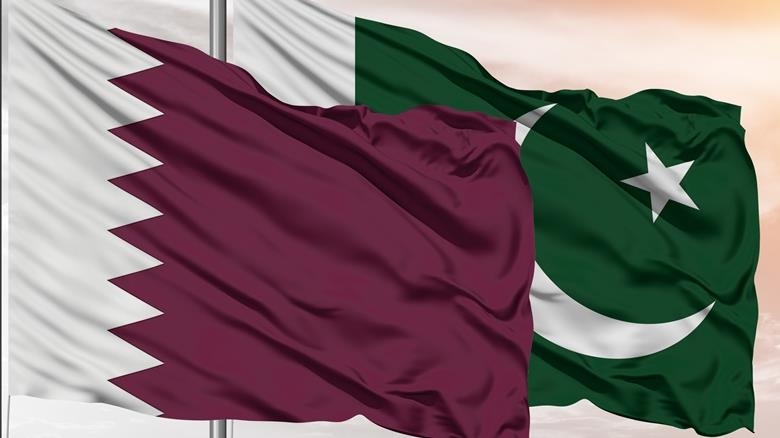
Pakistan and Qatar, both brotherly Islamic countries, have deep-rooted, time-tested, strong relations based on mutual respect, cooperation, and understanding.
Pakistan shares warm and cordial relations with Qatar as well as excellent brotherly ties. On matters about regional and global affairs, both Countries have always been on the same page. Pakistan places considerable importance on its relationship with Qatar, which is based on strong foundations of common faith and culture. However, there is a need to strengthen these relations through enhanced bilateral economic cooperation and boost interaction between the private sectors of both countries.
Trade Volume has multiplied between Pakistan and Qatar as a result of the LNG supply agreement. Major items of export from Pakistan to Qatar include rice, leather, textiles, rags, cotton yarn, woven fabric, meat, etc. Conversely,major items of import from Qatar are petroleum, plastic, organic chemicals, and iron, etc.The five main mutual sectors of investment are banking, insurance, and the services sector, which includes tourism, IT, telecommunication, oil, and gas. Pakistan’s investment in Qatar is mainly in real estate, construction machinery, and the technical services industry.Pakistani businessmen and professionals are playing a major role in the banking, medical, and construction sectors of Qatar. Recently, an agreement has been reached to increase the Number of Pakistani blue-collar workers in Qatar to 100,000.
The Government of Qatar and Pakistan enjoy an exceptionally cordial relationship and intend to widen cooperation in economic, defence, and political sectors to ensure mutual growth and benefit. Pakistan possesses vast resources and an incredible investment potential. Qatari business groups/companies should partake in the privatization process of Pakistan, as well as focus on investment opportunities in the fields of livestock and dairy.
In 2022, the football World Cup in Qatar, the football used in this tournament was made in Pakistan, the security of the stadiums was the responsibility of the Pakistan Army, and securing the marine borders of Qatar was the responsibility of the Pakistan Navy.
Pakistan’s relations with Qatar are firmly grounded in shared faith, values, and mutual goodwill. Bilateral ties have been cordial since the establishment of diplomatic relations in 1972. Pakistan’s first Ambassador to Qatar, Hakim M. Ahsan, opened the Mission on 9th January 1973 in Doha.Pakistan-Qatar relations have become even stronger and more multifaceted over the years as the leadership regularly engaged with each other both at the highest and the institutional level. The two countries enjoy a similarity of views on several regional and international issues.Pakistan values its relations with Qatar as a strategic partner in the region and has consistently worked towards enhancing cooperation across diverse fields, including trade & investment, education & IT, food security, tourism & hospitality, etc. Economic partnerships, strategic interests, presence of a significantly large diaspora, and cultural ties are some of the important constituents of this relationship.
Pakistan and Qatar have several institutional consultation mechanisms to enhance cooperation in several areas. These mechanisms include:
- Bilateral Political Consultations (BPC)
- Joint Ministerial Commission
- Joint Business Council
- Working Group on Trade & Investment
- Joint Committee on Labour
- Staff Talks for Cooperation in Defense
Defence cooperation which began in the early 1980s, is a major pivot of bilateral relations with Qatar. This has been formalized through multiple agreements and protocols. Regular exchange of high-level visits from military and defense leadership of both countries, training human resource of Qatar’s military institutions, institutional dialogue mechanism between the armed forces, and participation in joint military exercises are some of the important aspects of this growing relationship.Pakistan’s Armed forces joined the QAF for the security of the FIFA World Cup. Pakistan deployed a contingent of 4058 personnel of the Pakistan Army, Navy, and Air Force and 150 personnel of the Military Police. Pakistan Navy Ship TABUK docked at Umm al Houl Naval Base in Qatar to provide seaward security for the World Cup. PakistanArmed Forces were also engaged in the security of the Arab Cup, which took place in Doha in November 2021.
In addition to cooperation in the field of Defence Training and supply of equipment, both countries have signed an MoU between the National Defence University in Islamabad and the Strategic Studies Centre (SSC) in Qatar in the field of Academic Research and Cooperative Activities in 2016.Pakistani diaspora acts as an important social and cultural bridge and contributes actively in the economies of the two countries. Pakistan’s vibrant community in Qatar, in coordination with the Embassy and Qatar’s Ministry of Culture, organizes several events throughout the year to promote Pakistan’s rich cultural traditions. Pakistan’s pavilion at the Doha Expo 2023 also showcased Pakistan’s exquisite craftsmanship, reflecting Pakistan’s unique culture and heritage. Pakistani artists also painted large murals using the techniques of Truck art during the FIFA World Cup 2022.Qatar has also been actively undertaking social and development initiatives in Pakistan. Qatar extended much-needed support to Pakistan during the COVID-19 pandemic, including the provision of health supplies, and also offered financial support for purchasing the COVID-19 vaccines. Following the disastrous floods in Pakistan in 2022, Qatar pledged USD 25 million in assistance to Pakistan at the International Conference on Climate Resilient Pakistan held on 9 January 2023 at Geneva. Moreover, Qatar Charity, in partnership with UNICEF,implemented several interventions in the field of water, sanitation, and hygiene (WASH) in Punjab and Sindh provinces, benefitting thousands of people.
In the field of education, the Ministry of Federal Education & Professional Training, Pakistan, and Qatar Fund For Development (QFFD), in cooperation with the global education foundation Education Above All (EAA) signed an agreement in March 2022 to provide quality education for out-of-school children, through EAA’s Educate A Child programme. EAA has partnered with the Asian Development Bank to enroll 960,000 of some of the poorest Out of out-of-school children (OSSC) into primary education by 2025. It has contributed to the education of about 1.33 million of OSSC in Pakistan through various projects implemented since 2012 and has contributed more than $36 million through the ‘Educate a Child’ Program. Qatar is home to almost 300,000 Pakistanis, nearly 5% of the total population. This is a significant number considering that the native Qatari population forms only 12% of the total population in Qatar. Qatar is a significant employer of Pakistani manpower. The Pakistani diaspora is playing an important role in almost all development sectors of Qatar. High-skilled Pakistani professionals, for instance, in health, education, engineering, finance as well as Qatar’s public service, constitute almost 10% of the diaspora, whereas semi-skilled and unskilled work force dominating the construction and transport sectors constitute almost 90% of the Pakistani diaspora in Qatar.
Qatar is one of Pakistan’s important trade partners in the GCC region. Qatar is a major supplier of LNG to Pakistan, whereas Pakistan exports agricultural produce to Qatar.
In the current financial year, exports have experienced a decrease of 2.7%, falling from $162.5 million USD to $158.1 million USD. On the other hand, imports have shown a slight decline of 1.0%, decreasing from $3,567.2 million USD to $3,531.4 million USD. Key export items from Pakistan to Qatar include bovine meat, onions and related products, potatoes, sheep and goat meat, rice, maize, and various other agricultural and manufactured goods, highlighting a diverse range of products traded between the two nations.
Pakistan Qatar Trade Statistics
| Year | Export US$ million | Import US$ million |
| 2020 | 138.24 | 1,670.49 |
| 2021 | 140.05 | 1,917.04 |
| 2022 | 192.67 | 3,576.34 |
| 2023 | 162.46 | 3,567.22 |
| 2024 | 158.10 | 3,531.4 |
During the fiscal year 2023, remittances from Qatar to Pakistan decreased by -1% from USD 915.44 million in FY 2023 to USD 901.6 million in FY 2024. The remittances can be attributed to the prominent presence of Pakistani expatriates in various sectors, such as hospitality, engineering, and construction.
The details of the annual remittances from Qatar during the last 10 years are as follows:
| 2015 | 350 |
| 2016 | 380 |
| 2017 | 404 |
| 2018 | 371 |
| 2019 | 386 |
| 2020 | 484 |
| 2021 | 910 |
| 2022 | 1,028 |
| 2023 | 915 |
| 2024 | 902 |
The flow of foreign direct investment (FDI) from Qatar to Pakistan has been limited over the years. According to the State Bank of Pakistan, the FDI inflows from Qatar have fluctuated in recent years, with the highest inflows being recorded in FY 2021 at 18.6, and the lowest in FY 2018 at 0.9. Despite these fluctuations, the quantum of FDI inflows from Qatar remains relatively low. The investment inflows during the last 6 years are as follows:
Foreign Direct Investment (FDI) by Qatar in Pakistan
| 2019 | 0.3 |
| 2020 | 8.3 |
| 2021 | 18.6 |
| 2022 | 2.8 |
| 2023 | 1.6 |
| 2024 | 2.3 |