




















ISLAMABAD: Deputy Prime Minister and Foreign Minister Ishaq Dar on Monday reaffirmed Pakistan’s commitment to a foreign policy rooted in geo-economics and unwavering adherence to international peace and security.
“One of the core principles guiding this foreign policy approach is accentuating Pakistan’s pivot to geo-economics,” Dar said, highlighting his personal leadership in promoting economic diplomacy as a key pillar of the country’s global engagement.
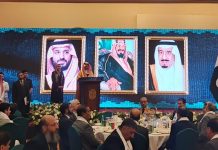
Speaking at an event to commemorate the 52nd anniversary of Institute of Strategic Studies Islamabad (ISSI) here, the deputy PM emphasized that enhancing trade, promoting foreign investment, attracting remittances and technology flows, and forging development partnerships were among the highest priorities. In this way, he said foreign policy became the most important instrument to protect and promote Pakistan’s economic interests and to substantially contribute to the process of national development.
“The other core principle is our abiding commitment to international law, United Nations Charter, and UN-centered multilateralism. This is of utmost importance for effectively addressing the world’s complex, interconnected threats and challenges — pertaining to peace and security, climate change and sustainable development, terrorism and trans-national crimes, strategic stability and destructive arms races, misinformation and disinformation, and Islamophobia and inter-faith harmony,” he added.
As regards the recent global turbulence and transformation, Ishaq Dar said both as a Middle Power and a key member of the ‘Global South’, Pakistan was contributing to the worthy causes of peace and security as well as sustainable development.
Referring to the India’s unfounded allegations following the Pahalgam attack, and its unprovoked aggression in May 2025, the deputy PM said Pakistan swiftly retaliated to the Indian escalation with a “quid pro quo plus” response – which is the “new normal” set by Pakistan if India insists on its dangerous notion of ‘limited war under the nuclear threshold.’
“The outcome of this 4-day war has once again underscored the reality that India can neither intimidate nor coerce Pakistan. New Delhi must, therefore, rethink its present hubristic and misguided policies that threaten peace and undermine security in South Asia.”
He said Pakistan also remained determined to protect its rights and entitlements under the Indus Waters Treaty (IWT). “We firmly reject attempts by India to weaponise water in pursuit of its narrow geopolitical objectives. India’s illegal and unilateral action of putting the Treaty “in abeyance” has no validity.”