
















ANTALYA: Prime Minister Muhammad Shehbaz Sharif left Antalya for Pakistan on Thursday after attending the COP31 Leaders’ Summit and holding a series of bilateral meetings with world leaders on its sidelines.
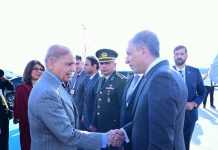
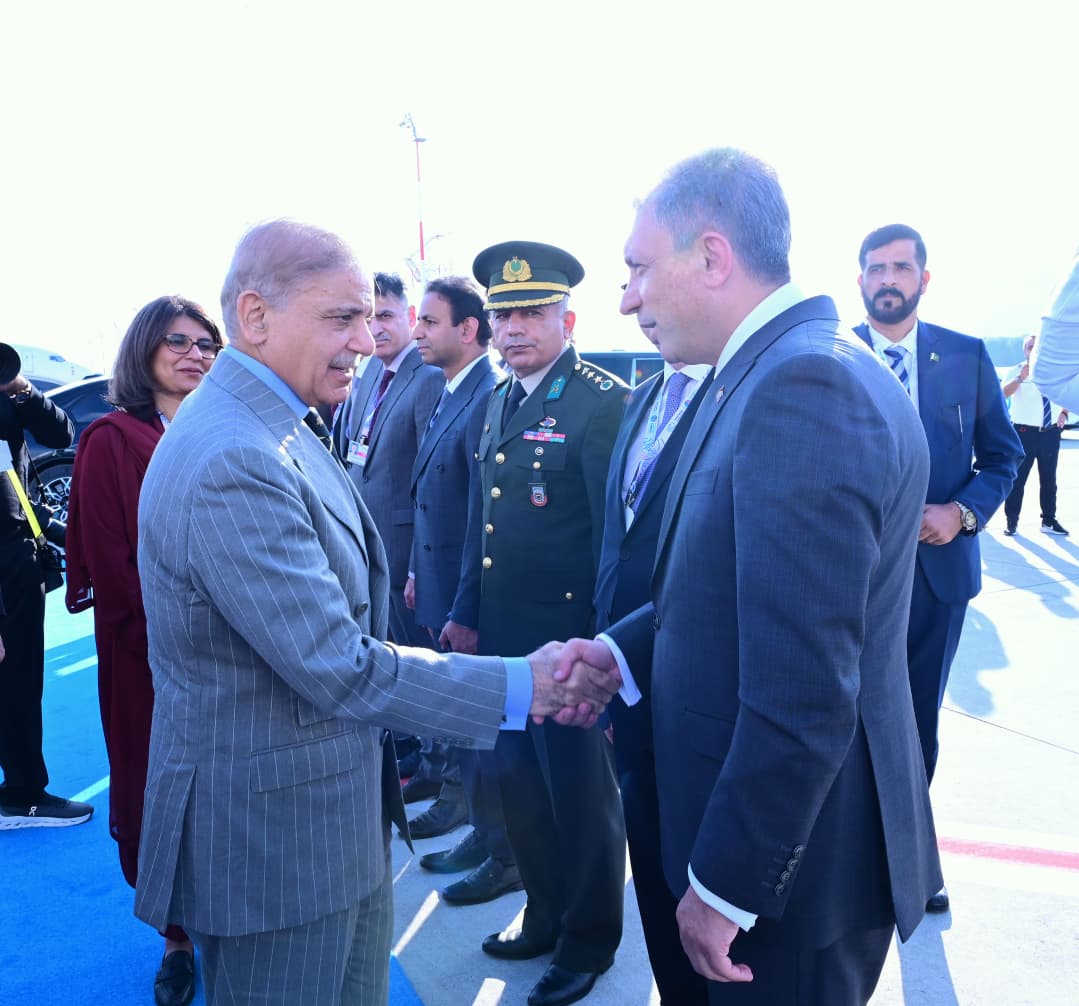
On departure, Türkiye’s Deputy Minister of Environment, Hasan Suver, bade him farewell at Antalya Airport, a Prime Minister’s Office news release said.
The prime minister represented Pakistan at the summit and made the case for climate support that does not add to the debt of vulnerable countries. He called for grant-based finance, including public-private partnership, and a significant enhancement of resilience and adaptation funds, which he described as survival funds for struggling economies.
He recalled the 2022 floods, which affected around 33 million people, and noted that Pakistan contributes less than 1 per cent of global carbon emissions. He urged world leaders to judge COP31 by practical achievements rather than political commitments.
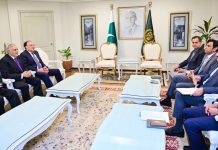
On the sidelines, he met President Recep Tayyip Erdogan. The two leaders discussed trade and investment, defence collaboration, energy cooperation and connectivity, and stressed the need to speed up ongoing initiatives. President Erdogan appreciated Pakistan’s mediation efforts, which led to the signing of the Islamabad MoU.
He also met Finnish President Alexander Stubb. He said Pakistan wanted to build a forward-looking partnership with Finland in trade and investment, education, skills development, technology, climate resilience and people-to-people contacts. He repeated his invitation to President Stubb to visit Pakistan. The prime minister also met the president of Iraq and Sudan’s Sovereignty Council chief, General Abdel Fattah al-Burhan.
The prime minister arrived in Antalya and was received by Türkiye’s Deputy Minister of Culture and Tourism, Gökhan Yazgi, and Pakistan’s Ambassador-designate to Türkiye, Amna Baloch. A “Pakistan Pavilion” was set up at the venue to host 54 events. He was accompanied by Senator Sherry Rehman, Information Minister Attaullah Tarar and Adviser Tariq Fatemi.
He addressed the high-level session “Clean Energy Transition by 2035: Powering the Future,” saying clean sources now account for nearly 55 per cent of Pakistan’s energy mix.
He said he had inaugurated a key section of the seventh nuclear power plant before leaving, which will add 1,200 megawatts to the national grid. He also met Iranian President Masoud Pezeshkian. The two reaffirmed their close ties and exchanged views on the regional situation, and Pezeshkian appreciated Pakistan’s efforts for regional peace and security.
He addressed the Leaders’ Summit, held meetings with the Turkish, Finnish, Iraqi and Sudanese leaders, and left for Pakistan.