





















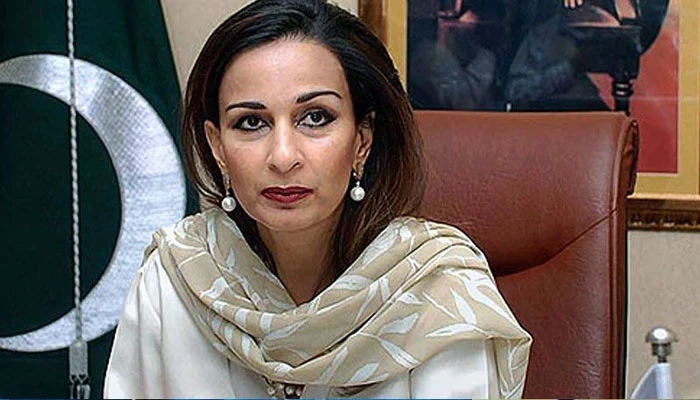
ISLAMABAD, Oct 05 (APP): Senator Sherry Rehman here on Monday called for a transparent and incentive-based Environmental, Social and Governance (ESG) framework in Pakistan, stressing that ESG could not remain a matter of voluntary reporting or corporate image-building and must translate into measurable improvements in environmental performance, social responsibility and governance.
Addressing the launch of the Pakistan ESG Policy Report 2026 as chief guest, Senator Rehman said that ESG required a much broader conversation than one confined to the corporate sector. “We have to talk about ESG not in isolation, but in terms of climate, political and legal frameworks,” she said, stressing that the country needed to bring together the people who understand the technical, regulatory and legislative dimensions of the issue.
Senator Rehman said that the fundamental question was no longer whether Pakistan needed ESG, but what kind of framework it wanted to build and what consequences would follow from it. “Laws are very important when it comes to a regulatory framework, especially when that framework has to interoperate with international stakeholders.”
Referring to Pakistan’s existing corporate practices, she pointed to the significant gap between awareness of ESG and actual implementation. An ESG 2023 survey found that 86 percent of businesses were aware of ESG risks and 81 percent were aware of ESG opportunities, yet only 18 percent had an ESG-certified director on their boards, while just 11 percent were issuing sustainability reports. Even among those reporting, she noted, disclosures were often limited or insufficiently detailed.
“With roughly 537 companies listed on the Pakistan Stock Exchange, we still have a very wide gap between awareness and implementation,” Senator Rehman said. “Very few companies are reporting their actual carbon footprint, circularity, resource use or the measurable environmental impact of their operations. This is particularly important for export-oriented companies that are increasingly entering regulatory environments such as the European Union’s Carbon Border Adjustment Mechanism.”
She suggested that companies filing sustainability reports could eventually be required to appear before relevant parliamentary committees and explain their ESG disclosures.
“We need to understand what companies need. You will not get real data without incentivisation. The objective should be to create a framework in which companies have a reason to disclose accurately, improve their performance and participate in shaping the policy itself.”
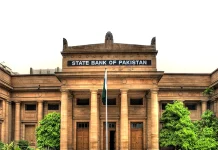
Senator Rehman also underscored the importance of the Pakistan Green Taxonomy, describing it as one of the key structural tools for creating a common understanding of what constitutes sustainable economic activity. The taxonomy, being advanced through collaboration involving the State Bank of Pakistan, Ministry of Climate Change and international partners including the World Bank, can provide what she called a common “language” for businesses, financial institutions and regulators.
She stressed that Pakistan’s ESG architecture must also remain aligned with rapidly evolving international trade and regulatory requirements, particularly the EU’s CBAM, which will increasingly affect exporters based on the carbon intensity of covered products.
Senator Rehman said Pakistan had already begun moving towards mandatory ESG disclosures through the phased framework introduced by the Securities and Exchange Commission of Pakistan (SECP). Under the current schedule, Phase-I begins on July 1, 2029, covering companies meeting at least two of the specified thresholds of turnover above Rs 25 billion, more than 1,000 employees, or assets above Rs 12.5 billion. Phase-II begins on July 1, 2030, covering companies meeting at least two of the thresholds of turnover above Rs 12.5 billion, more than 500 employees, or assets above Rs 6.25 billion. Phase-III begins on July 1, 2031, extending the framework to remaining listed companies and non-listed public-interest companies.
Senator Rehman urged the private sector to present policymakers with a cascade of options, with at least three workable alternatives, rather than simply identifying problems. She also called for clear proposals on how ESG data could be transparently verified and independently scrutinised.
She proposed that companies and industry groups should develop their performance indices and measurable benchmarks, identify priority areas for legislation and demonstrate where incentives could accelerate compliance.
Senator Rehman concluded by emphasising that ESG should not be treated as a narrow corporate reporting exercise, but as part of Pakistan’s wider transition towards a cleaner, more resilient and internationally competitive economy.
“Resilience comes from people, not governments. Government can provide the framework, Parliament can provide the law, regulators can provide the standards, and business can provide the innovation and investment. But unless all of these actors become stakeholders in the transition, ESG will remain a report rather than a reality,” she said.