












(www.thenewslark.com)
By Brig Syed Karrar Hussain (Retired)
Every nation has defining moments that shape its political culture and strengthen its collective resolve. For the Republic of Türkiye, 15 July Democracy and National Unity Day stands as one such landmark. It commemorates the resilience of the Turkish people, their commitment to constitutional governance, and the unity displayed in defending democratic institutions during the failed coup attempt of 15 July 2016.
Observed annually across Türkiye, the day is not merely a remembrance of a difficult chapter in the nation’s history but a reaffirmation of the principles of democracy, constitutional supremacy, and national solidarity. Through public ceremonies, memorial services, exhibitions, seminars, and addresses by the country’s leadership, Turkish citizens honour those who sacrificed their lives while emphasizing that the future of the nation must always be determined through democratic means.
The commemorations begin with the lowering of flags to half-mast in memory of the martyrs, followed by prayers in mosques, floral tributes at memorials, educational programs, and cultural events highlighting national unity. Across cities and villages alike, citizens participate in activities that reinforce patriotism, constitutional order, and public confidence in democratic institutions. Turkish media also devote extensive coverage to documentaries and discussions reflecting upon the events of July 2016 and the lessons learned from them.
A Long History of Pakistan–Türkiye Friendship
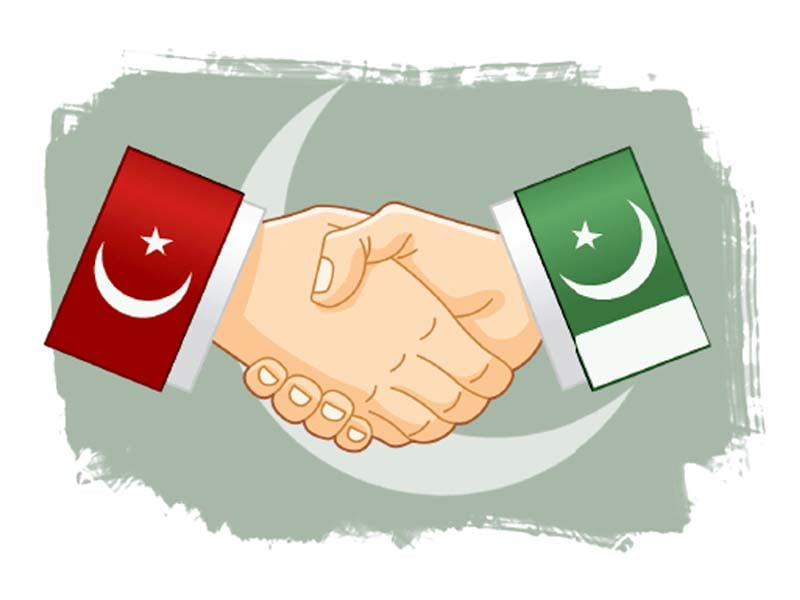
The friendship between Pakistan and Türkiye is among the strongest and most enduring bilateral relationships in the Muslim world. It is founded not merely on diplomatic convenience but on centuries of shared history, cultural affinity, religious bonds, and mutual respect.
Long before the creation of Pakistan, the Muslims of the Indian subcontinent actively supported the Ottoman Empire during difficult times. The Khilafat Movement reflected the deep emotional attachment that Muslims of South Asia felt towards Türkiye. After Pakistan emerged as an independent state in 1947, Türkiye was among the earliest countries to establish warm diplomatic relations with the new nation.
Since then, the two countries have consistently supported each other in international forums, including the United Nations and the Organization of Islamic Cooperation (OIC). Their cooperation extends across defence, trade, education, disaster management, tourism, technology, and cultural exchanges.
Military cooperation has been particularly significant. Defence training, joint military exercises, defence production, intelligence sharing, and strategic consultations have enhanced the capabilities of both nations. Turkish defence industries have become important partners for Pakistan in naval modernization, aerospace cooperation, and advanced defence technologies.
Economic relations are steadily expanding. Although bilateral trade has considerable room for growth, both governments continue to encourage investment, industrial collaboration, banking cooperation, infrastructure development, and connectivity. Turkish companies have contributed to transportation, municipal services, and construction projects in Pakistan, while Pakistani entrepreneurs increasingly view Türkiye as an attractive gateway to European and Central Asian markets.
Equally important are the people-to-people connections. Turkish television dramas have become immensely popular in Pakistan, introducing millions of Pakistanis to Turkish history, language, architecture, and family values. Likewise, thousands of Pakistani students and tourists visit Türkiye every year, strengthening mutual understanding between the younger generations.
Democracy and the Constitutional Role of Armed Forces
Every democratic state functions effectively when all national institutions operate strictly within their constitutional mandates. The legislature legislates, the executive governs, the judiciary interprets the law, and the armed forces defend the sovereignty and territorial integrity of the nation.
In my opinion, the armed forces should not perform political functions unless such responsibilities are expressly assigned under the constitution or during extraordinary national emergencies under constitutional provisions. Their professionalism, discipline, and operational effectiveness are best preserved when they remain focused on their primary mission of national defence.
However, developing countries often face governance challenges that complicate this ideal. Nations such as Pakistan have struggled with corruption, administrative inefficiency, electricity theft, illegal land occupation, ghost schools, tax evasion, weak local governance, and misuse of public resources. These problems impose enormous economic costs and erode public confidence in civilian institutions.
The existence of these governance failures should not automatically justify expanding the constitutional role of the armed forces into civilian administration. Instead, they highlight the urgent need to strengthen civil institutions, improve accountability mechanisms, modernize public administration, and ensure the impartial enforcement of law.
Where constitutions specifically authorize military assistance to civil authorities during natural disasters, counterterrorism operations, national emergencies, or to support law enforcement under civilian direction, such cooperation can be both necessary and beneficial. Pakistan’s armed forces have repeatedly demonstrated exceptional capability during earthquakes, floods, counterterrorism operations, and humanitarian relief efforts. Their contribution in these constitutionally sanctioned roles has earned widespread public respect.
The long-term solution to governance problems, however, lies in building stronger civilian institutions capable of delivering transparent, efficient, and accountable public services. Independent anti-corruption agencies, empowered local governments, digitized public administration, judicial reforms, police modernization, educational accountability, and transparent land management systems are essential components of sustainable democratic governance.
Türkiye’s own democratic journey illustrates that resilient institutions become stronger when constitutional processes remain supreme and when national unity prevails over political polarization.
Expanding Pakistan–Türkiye Cooperation
The strategic partnership between Pakistan and Türkiye possesses enormous untapped potential. Both countries occupy pivotal geopolitical positions connecting Asia, Europe, and the Middle East. Their complementary strengths create opportunities for long-term cooperation.
Economically, both governments should accelerate negotiations aimed at increasing bilateral trade, encouraging joint ventures, facilitating banking cooperation, simplifying customs procedures, and promoting industrial partnerships. Special economic zones can attract Turkish investment in textiles, information technology, renewable energy, pharmaceuticals, agriculture, and food processing.
In education, universities should expand student exchange programs, joint research initiatives, language training, scholarships, and faculty collaborations. Scientific cooperation in artificial intelligence, cyber security, biotechnology, engineering, and medical sciences would benefit both countries.
Tourism offers another promising avenue. Pakistan’s breathtaking mountains, archaeological heritage, and religious tourism sites can attract Turkish visitors, while Pakistanis continue to appreciate Türkiye’s historical cities, museums, and cultural landmarks. Improved air connectivity and simplified visa arrangements would further encourage tourism.
Cultural diplomacy should receive greater emphasis through joint film productions, literary festivals, translation projects, youth exchanges, sports competitions, and media collaborations. Such initiatives deepen mutual understanding far beyond official diplomacy.
Defence cooperation should continue evolving through joint production of advanced military equipment, naval collaboration, aerospace research, cybersecurity cooperation, counterterrorism training, peacekeeping coordination, and defence technology innovation. These initiatives contribute not only to national security but also to technological advancement and industrial development.
Conclusion
The observance of Turkish Democracy and National Unity Day reminds the world that democratic institutions derive their strength from constitutional legitimacy, national unity, and public confidence. The courage displayed by the Turkish people in defending their constitutional order continues to inspire discussions on democracy, institutional resilience, and national cohesion.
For Pakistan, the Turkish experience reinforces an important lesson: strong nations are built through effective institutions, constitutional governance, accountable leadership, and active citizen participation. Governance challenges such as corruption, electricity theft, illegal land occupation, ghost schools, and administrative inefficiency must be addressed through institutional reform, transparent governance, and the rule of law rather than by weakening constitutional boundaries.
Pakistan and Türkiye already enjoy an exceptional friendship built on shared history, mutual trust, and strategic cooperation. By expanding economic partnerships, strengthening cultural exchanges, deepening educational collaboration, and advancing defence cooperation, the two brotherly nations can build an even more prosperous future while continuing to serve as pillars of stability, moderation, and constructive partnership in the wider region.