






















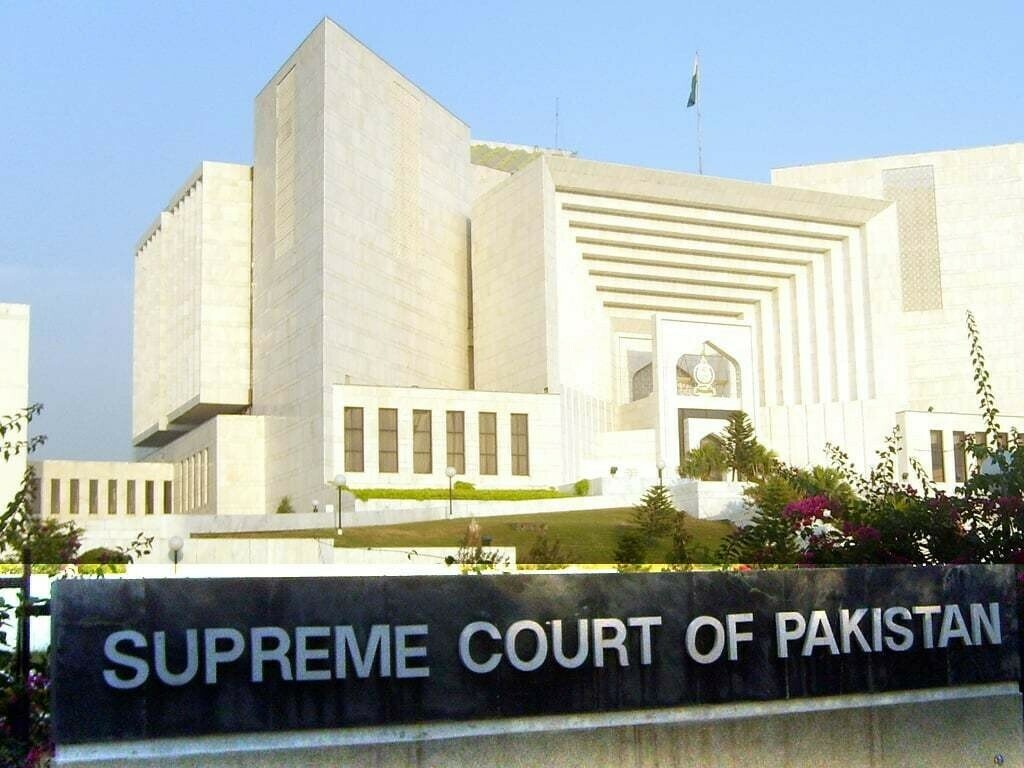
ISLAMABAD: The Supreme Court (SC) has ruled that the right of pre-emption is a weak and fragile legal right, and its enforcement requires strict compliance with all mandatory requirements under the Punjab Pre-emption Act, 1991, including Talab-e-Muwathibat (immediate demand) and Talab-e-Ishhad (demand before witnesses).
A three-member bench comprising Justice Muhammad Ali Mazhar, Justice Musarrat Hilali and Justice Shahid Bilal Hassan allowed an appeal in a dispute over 66 kanals and one marla of agricultural land in Jhelum, setting aside the June 13, 2019 judgment of the Lahore High Court’s Rawalpindi Bench.
In the written judgment authored by Justice Shahid Bilal Hassan, the Court observed that the right of pre-emption essentially enables a claimant to substitute himself for the purchaser and, therefore, every statutory condition governing its exercise must be fulfilled strictly.
The Court held that the date, time and place of Talab-e-Muwathibat constitute the foundation of a pre-emption claim, as these details determine whether the right was exercised immediately upon receiving knowledge of the sale. It further ruled that unless the claimant proved the complete chain through which information about the sale was received, the claim could not succeed.
The judgment noted that the plaintiffs failed to establish the exact and reliable source from which they learned about the sale. Without proving the complete chain of communication, it was impossible to determine whether Talab-e-Muwathibat had been made promptly or after an unexplained delay.
The Supreme Court also found material contradictions in the testimony of the plaintiffs’ witnesses regarding the communication of the sale, the meeting where the demand was allegedly made, the persons present, and the performance of Talab-e-Muwathibat. It held that such inconsistencies could not be treated as minor because strict adherence to legal requirements was indispensable in pre-emption cases.
The Court further observed that the Lahore High Court had failed to properly examine these fundamental legal and evidentiary deficiencies while affirming the concurrent findings of the subordinate courts, resulting in an erroneous application of the law.
Holding that the plaintiffs had failed to prove valid compliance with the mandatory requirement of Talab-e-Muwathibat, the Supreme Court concluded that their claim for pre-emption was unsustainable. Consequently, the appeal was allowed and the Lahore High Court’s judgment was set aside.