



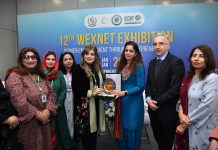











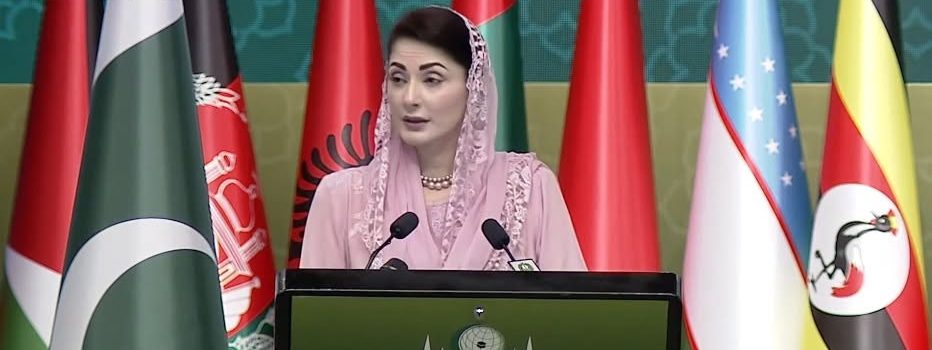
ISLAMABAD: Punjab Chief Minister Maryam Nawaz Sharif on Monday called for collective efforts across the Muslim world to ensure women have equal access to education, economic opportunities, healthcare and leadership, saying women’s empowerment was the key to sustainable development and stronger societies.
Addressing the 9th Ministerial Conference on Women of the Organization of Islamic Cooperation (OIC) said, “If circumstances can empower one woman, opportunity can empower millions. Let us work together through the platform of OIC to ensure that every girl in the Muslim world has access to education. Every girl across the Muslim world has access to opportunity.”
“Our commitment to women’s empowerment is deeply rooted in our faith and values. Islam honours women with dignity, rights and respect. In empowering women, we are not departing from our traditions; we are returning to them,” she said
She said the OIC represented the collective aspirations, shared values and common future of Muslim nations, emphasizing that women must not merely benefit from development but actively shape it as leaders, entrepreneurs and decision-makers.
The chief minister said the story of women in the Muslim world had always been one of resilience, courage, perseverance and leadership, adding that empowerment was often forged through challenges rather than bestowed by others.
She said her own political journey had taught her that true empowerment was often shaped by challenging circumstances.
Recalling her experience of standing alongside former prime minister Muhammad Nawaz Sharif during periods of political adversity, she said those experiences had strengthened her resolve, taught her patience and deepened her understanding of the struggles faced by ordinary women.
CM paid tribute to Mohtarma Fatima Jinnah, Begum Kulsoom Nawaz Sharif and Shaheed Mohtarma Benazir Bhutto, saying these women had demonstrated exceptional courage and leadership while paving the way for future generations.
She said Pakistan had achieved important milestones in women’s political representation by electing the Muslim world’s first woman prime minister, the country’s first woman speaker of the National Assembly and Punjab’s first woman chief minister, while the Lahore High Court was now headed by its first woman chief justice.
Maryam Nawaz said these achievements represented progress not only for individual women but also for millions of girls aspiring to leadership roles.
She said women’s empowerment should not remain a symbolic slogan but must translate into practical improvements in people’s lives.
“Women’s empowerment is the distance between rights written on paper and rights implemented on the ground,” she said, adding that governments must ensure policies reached the women for whom they were intended.
Highlighting the Punjab government’s initiatives, Maryam Nawaz said her administration had launched a wide range of programmes aimed at improving women’s economic empowerment, education, healthcare, housing, entrepreneurship and public safety.
She said 60 percent of the beneficiaries under the “Honhaar Scholarship Programme” were female students, reflecting the government’s commitment to expanding educational opportunities for young women.
She said the “Apni Chhat Apna Ghar” housing programme was providing security and dignity to low-income families.
Recalling her meeting with the programme’s first beneficiary, a widow raising three daughters, she said the woman had struggled for years to pay rent and had even withdrawn her daughters from school because of financial hardship.
“Today, she has a home of her own and her daughters have returned to school. A house provides not only shelter but also security and hope for the future,” she said.
The chief minister said around 200,000 families had benefited from the housing initiative, enabling them to move from rented accommodation to permanent home ownership.
She said the “Apna Khet Apna Rozgar” initiative aimed to provide land ownership and sustainable livelihoods to women, particularly widows and landless families.
Highlighting the “Honhaar Scholarship Programme”, Maryam Nawaz shared the story of a female student who was forced to leave university after her family could only afford to educate her brother.
She said government financial support enabled the student to resume her education and pursue her dreams.
“The scholarship is not merely financial assistance; it is permission to dream and an investment in future generations,” she remarked.
The chief minister said the Punjab government’s laptop distribution programme was equipping young women with digital tools to access education, knowledge and employment opportunities, while internship, tourism and IT skills programmes were helping graduates become financially independent.
Maryam Nawaz said women entrepreneurs were also benefiting from interest-free “Asaan Karobar Finance” loans, IT and freelancing training programmes, livestock distribution schemes and support for cottage industries and e-commerce platforms.
The chief minister said the government was extending financial assistance to women with disabilities through the “Himmat Card” programme, enabling them to live with dignity and independence.
She said the “Dhee Rani Programme” was supporting underprivileged families by assisting young women with marriage-related expenses, helping thousands of daughters begin a new chapter of their lives with dignity and confidence.
Maryam Nawaz said the Punjab government was also strengthening women’s participation in the justice sector by improving professional facilities for female legal practitioners and promoting their representation in leadership positions.
Highlighting healthcare initiatives, she said more than 1,000 field hospitals and mobile health units had been established to deliver medical services to remote communities, while expanded maternal healthcare programmes and over 60,000 female health inspectors were ensuring healthcare reached women and children at their doorsteps.
She said Punjab’s newly launched electric mass transit system included dedicated facilities for women, while the “Pink Taxi” initiative was creating safe transportation and new employment opportunities for women.
The chief minister said Punjab had also prioritized women’s safety through the expansion of Safe City projects, Violence Against Women Centres, Women Protection Centres, virtual women police stations, mobile police stations, women’s safety applications and dedicated safety zones equipped with modern facilities.
She said the provincial government had introduced women-friendly transport initiatives, including dedicated spaces in public transport and the Pink Taxi project, aimed at creating employment opportunities and ensuring safe mobility for women.