
















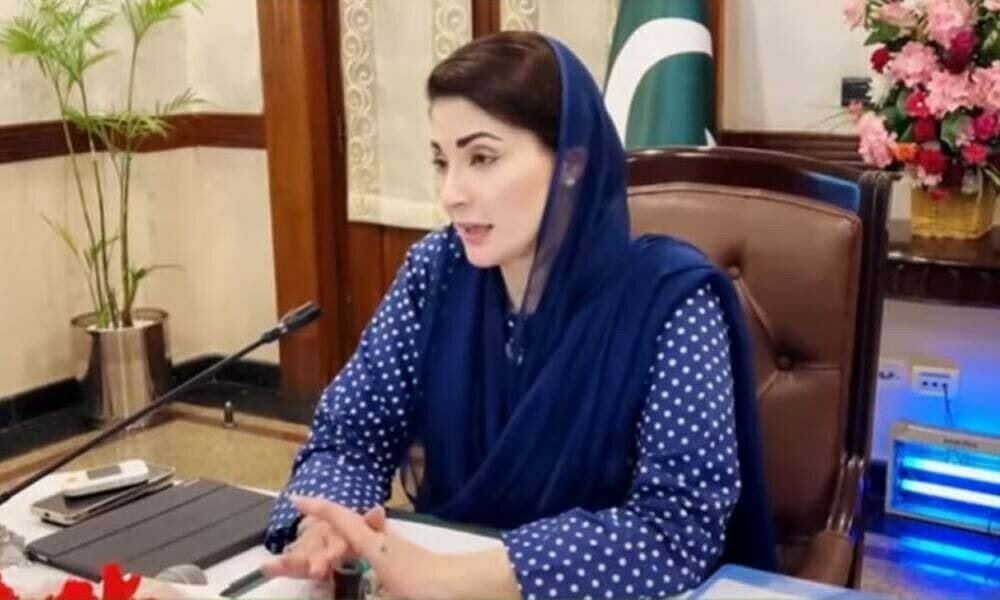
LAHORE:Punjab Chief Minister Maryam Nawaz Sharif chaired the 34th meeting of the provincial cabinet, which approved a wide range of policy decisions, development initiatives, administrative reforms and public welfare programmes across multiple sectors, here on Monday.
The cabinet paid glowing tribute on the first anniversary of Marka-e-Haq to Quaid Muhammad Nawaz Sharif, Prime Minister Shehbaz Sharif, Field Marshal Syed Asim Munir, as well as the Air Chief and Naval Chief. It also commended the Chief Minister for the successful operations in the riverine Katcha areas. The meeting appreciated the performance of the finance minister and finance secretary for the swift establishment of the Punjab General Insurance Company (PGIC), which was formally approved.
The cabinet approved the launch of the “Apna Khet, Apna Rozgar” scheme for residents of Cholistan and riverine areas on easy terms. It was informed that 30,000 plots had been identified under the programme, while around 200,000 families had already submitted applications. The Chief Minister directed strict digital monitoring of the scheme, ensuring citizens can access complete information “with one click”.
Key decisions included approval of summer vacations in schools from May 22 to August 24, expansion of Quaid-e-Azam Business Park Sheikhupura by 200 acres, implementation of axle load management system across Punjab, and lifting of the recruitment ban in the Punjab Mass Transit Authority. The cabinet also approved restructuring and capacity enhancement of the Provincial Disaster Management Authority (PDMA), upgradation of the UET sub-campus Narowal into a full-fledged engineering university, and establishment of the Punjab General Insurance Company.
The meeting further approved inclusion of hill torrent (Rod Kohi) projects in Rajanpur and Dera Ghazi Khan in ADP 2025–26, establishment of a Provincial Traffic Management and Command Centre, launch of the Chief Minister Stroke Management Programme, and placement of Data Darbar Hospital under the Auqaf Department. It also approved establishment of the Aquaculture Authority of Punjab and transfer of forest land for shrimp estates.
Infrastructure and development approvals included additional funds for the Lala Musa–Maiwana road project, rehabilitation of roads in Sahiwal, Mianwali and Faisalabad, expansion of service roads from Gulshan Ravi to Babu Sabu, and Rs500 million development schemes in Sheikhupura. The Bank of Punjab was designated as financial agent for the Clean Air Programme.
Relief measures included abolition of transfer fees for motorcycles up to 150cc, targeted fuel subsidies for motorcycle riders and Kisan Card holders, and enhanced benefits under the Chief Minister Minority Card programme.
Legislative and institutional reforms included approval of the Punjab Control of Ghunda and Anti-Social Behaviour Act 2025, amendments to the Anti-Terrorism Act 1997, establishment of Punjab Film City Authority Ordinance 2026, waste-to-energy projects on government land, and pilot groundwater recharge projects through borehole systems.
The cabinet also approved urban bus operations under a rental model for free public transport, annual maintenance grants for 5,182 water filtration plants, recruitment relaxations in multiple departments, and establishment of additional courts in Hazro (Attock) and Kot Chhutta (Dera Ghazi Khan).
Other major approvals included Punjab’s New Energy Vehicle (NEV) Policy, engagement of Lahore Qalandars franchise for anti-smog awareness campaigns, merger of Punjab Forensic Science Agency into the Punjab Forensic Science Authority, establishment of friendship province relations with Zhejiang (China), and approval of appointments of vice chancellors, judges, chief executives and senior officials in various institutions.
Addressing the cabinet, the CM directed officials to ensure swift issuance of NOCs and approvals for industrial projects, stating that “whoever wants to establish industry in Punjab will be fully supported.” She stressed that industrialists should be facilitated in bringing investment plans and warned against unnecessary delays or bottlenecks in approvals.
The CM also issued strict instructions against unauthorized expenditures, saying that spending without prior approval would not be tolerated under any circumstances.
The meeting also approved the minutes of the 33rd cabinet meeting and ratification of decisions taken by cabinet standing committees on legislation and privatisation.