














KARACHI:Senior Pakistani lawmakers have sharply criticized the country’s power regulator, accusing it of prioritizing electricity producers over consumers as capacity payments and persistent load-shedding continue to burden households and industry.
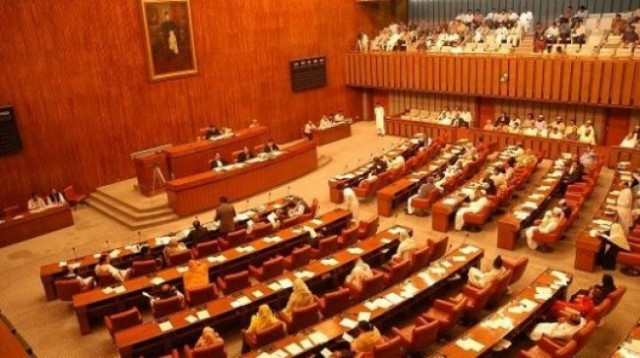
The criticism came during a meeting of the Senate Standing Committee on the Cabinet Secretariat at the Sindh Secretariat on Saturday, where officials of the National Electric Power Regulatory Authority (NEPRA) were questioned over tariffs, capacity charges and the performance of Independent Power Producers (IPPs).
Senator Saleem Mandviwala told the committee that Nepra, established nearly three decades ago to protect consumers, had instead become “an advocate for power producers”.
“Consumers are being charged Rs2.2tn for electricity that was neither generated nor used,” Mandviwala said, referring to capacity payments that remain payable even when electricity demand falls in winter. “It has been 28 years. If low-cost electricity is not available to the public, the system has clearly failed.”
Senator Saleem Mandviwala asked Nepra to move beyond technical explanations and explain how affordable electricity would be delivered to ordinary citizens. “What charges are being applied per unit, and what precisely is Nepra’s role?” he asked.
The meeting, chaired by Senator Rana Mahmood-ul-Hassan, was convened to review the Solar Net Metering Policy and other regulatory matters. Senators Kazim Ali Shah, Muhammad Abdul Qadir and Atta-ur-Rehman attended, while Sindh Assembly members Shariq Jamal and Asif Musa participated at the committee’s invitation. Prominent businessman Zubair Motiwala was also present.
Supporting Mandviwala, Senator Abdul Qadir said government claims of falling electricity prices and reforms in the power sector had failed to translate into relief for the public. “Despite audits of IPPs and shutdowns of inefficient plants, electricity remains unaffordable for 250 million people,” he said.
Senator Abdul Qadir questioned why applications for 1,000MW of new electricity connections were stalled and warned that high energy costs were constraining exports. “You are collecting Rs2.2tn in capacity charges. What is being done about it?” he asked, alleging that IPPs had “held the entire country hostage” without facing forensic scrutiny of their earnings.
The committee chair said there is unanimous agreement on the need for a forensic audit of IPPs, covering new capacity being added to the grid as well as forthcoming power projects. Senator Abdul Qadir added that audits should also examine project feasibility, land valuation, fuel consumption, machinery output and whether plants were subject to annual technical inspections.
Responding to criticism, a Nepra official explained that electricity tariffs consisted of capacity charges and energy charges, with the former unrelated to actual consumption. “Capacity charges cannot be reduced,” the official said, adding that only two million of Pakistan’s 40 million consumers use three-phase connections. Increasing electricity sales, he said, was the only way to ease the burden of capacity payments.
Senator Andul Qadir rejected the explanation, arguing that people are paying for unused capacity while remaining underserved. He suggested seasonal industrial tariffs, proposing electricity at Rs10 per unit during winter to stimulate demand.
Nepra officials maintained that governance and shareholding issues in distribution companies fell outside their remit, saying their role was limited to performance regulation. Sales, they said, were the responsibility of the distribution companies.
Zubair Motiwala said that fuel adjustment surcharges and quarterly circular debt adjustments were offsetting any reduction in unit prices. He said multiple Nepra orders against K-Electric had been stayed by courts, making it “the most protected utility in the country”.
“With a system capacity of 42,000MW, only 28,000MW is operational, yet payments are being collected for the remaining 14,000MW,” Motiwala said, warning that industry would increasingly turn to alternative energy. “Major exporters have already arranged their own power. There will come a time when no one will buy electricity from the grid.”